Edoardo Agresti – Cathedrals on wheels
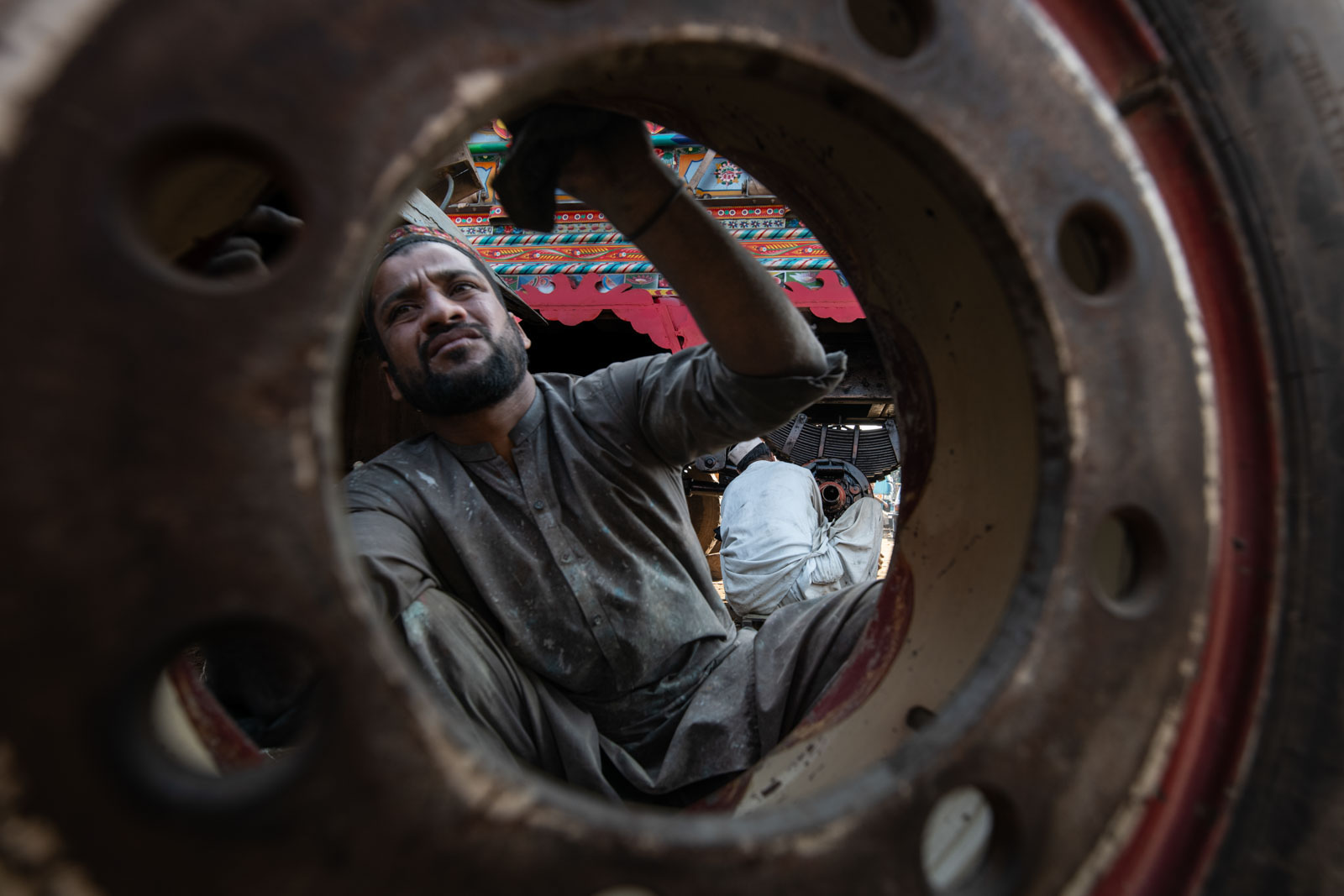
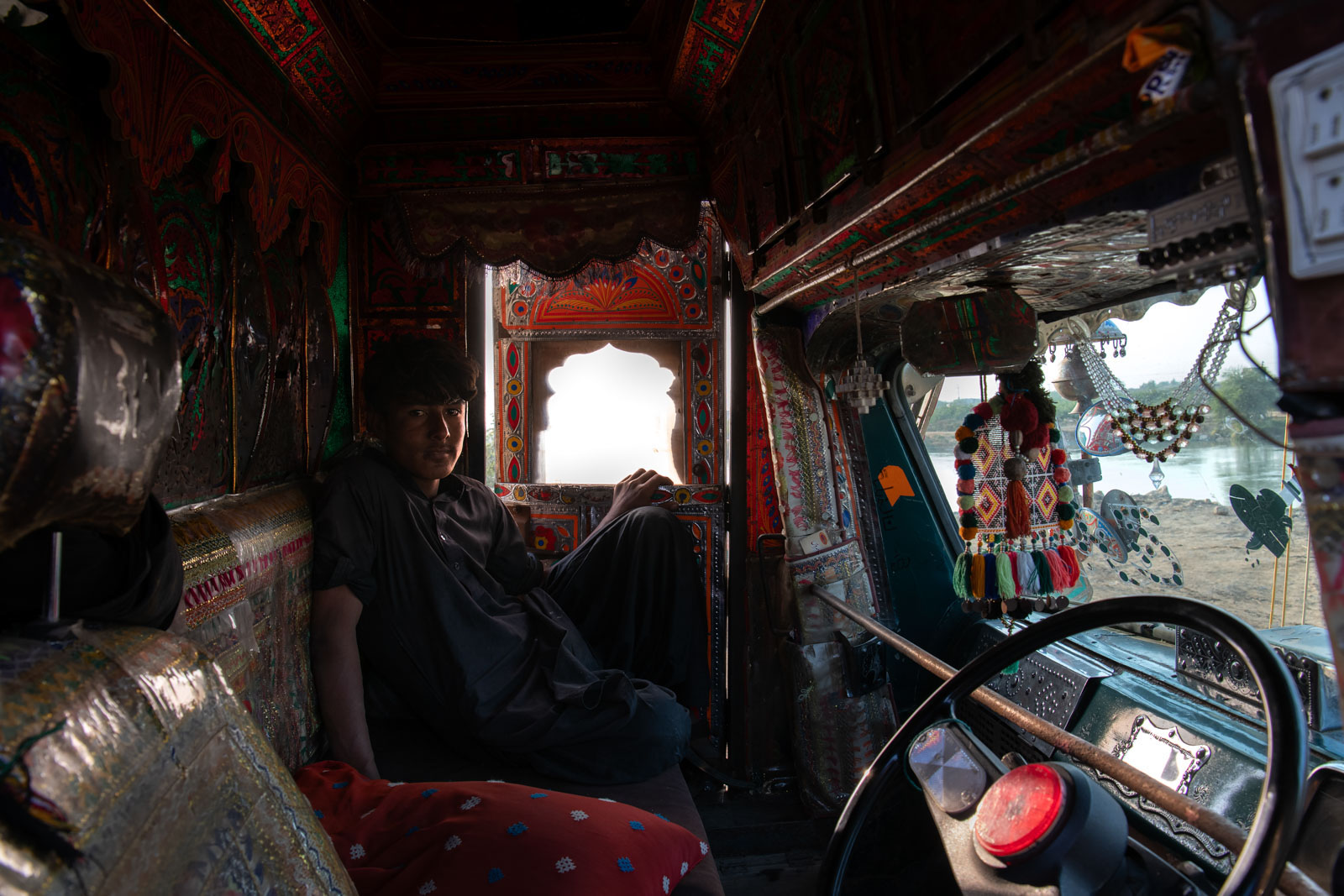
On the dusty roads of Pakistan, trucks are not mere means of transport: they are mobile cathedrals, manifestos of identity and resistance. Even before leaving, they are born in the courtyards of the workshops, where expert hands – real artists contended between the different ‘laboratories’ – transform anonymous metal sheets into living surfaces. Layers of paint overlap like stories: flowers, birds, saints, eyes that watch. Every detail is engraved, painted, applied with an artisanal patience that defies time and effort.
This transformation comes at a very high price: decorating a truck can cost between $10,000 and $20,000, a huge amount compared to average earnings. It is an investment that becomes pride, identity, a distinctive sign on the roads.
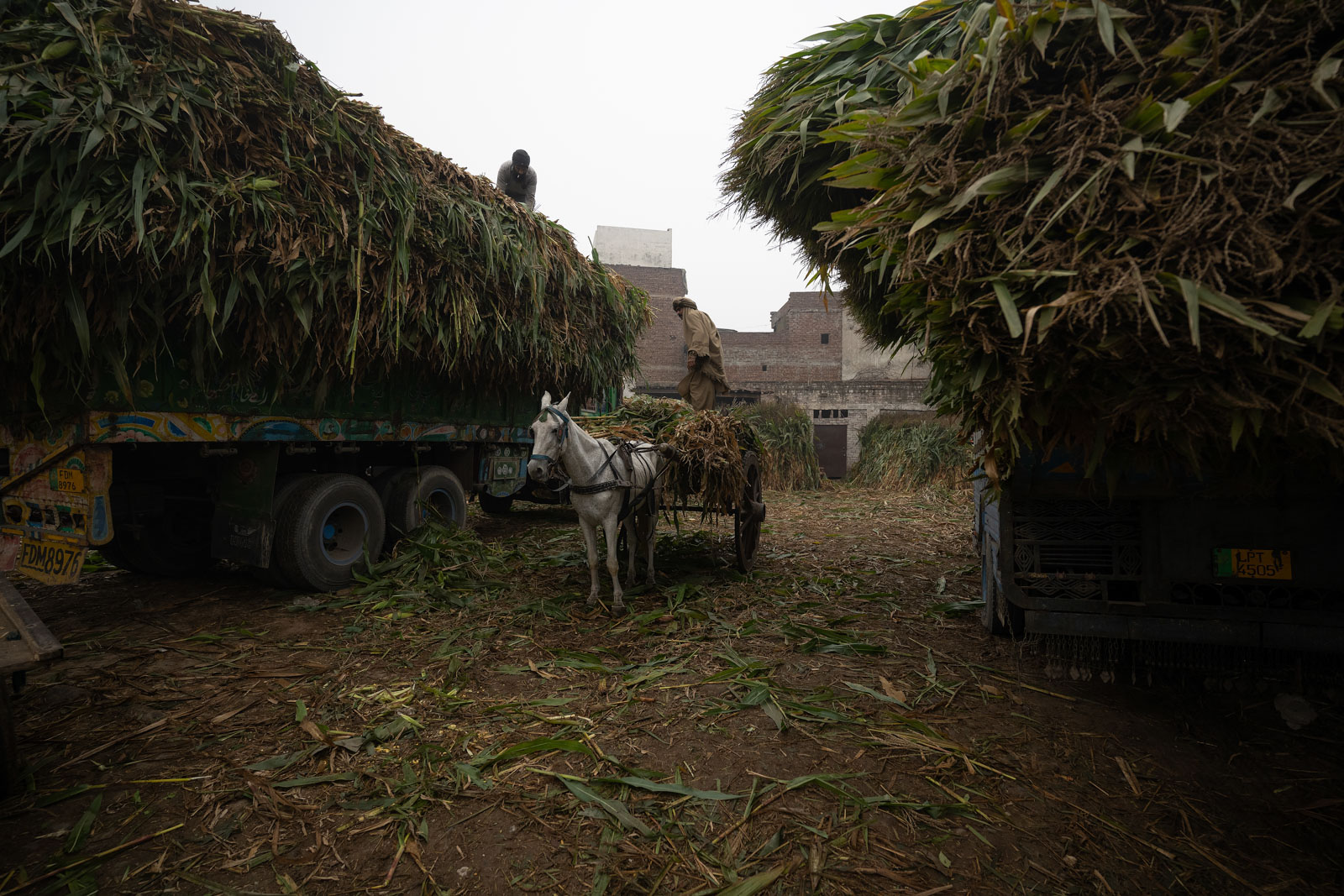
Then comes the load. Sacks, reeds, goods of all kinds accumulate until they defy balance, until they overflow beyond all logic. The truck becomes a mountain in motion, an overloaded body that advances slowly, oscillating, but stubborn. It is the weight of the informal economy, of necessity, of survival.
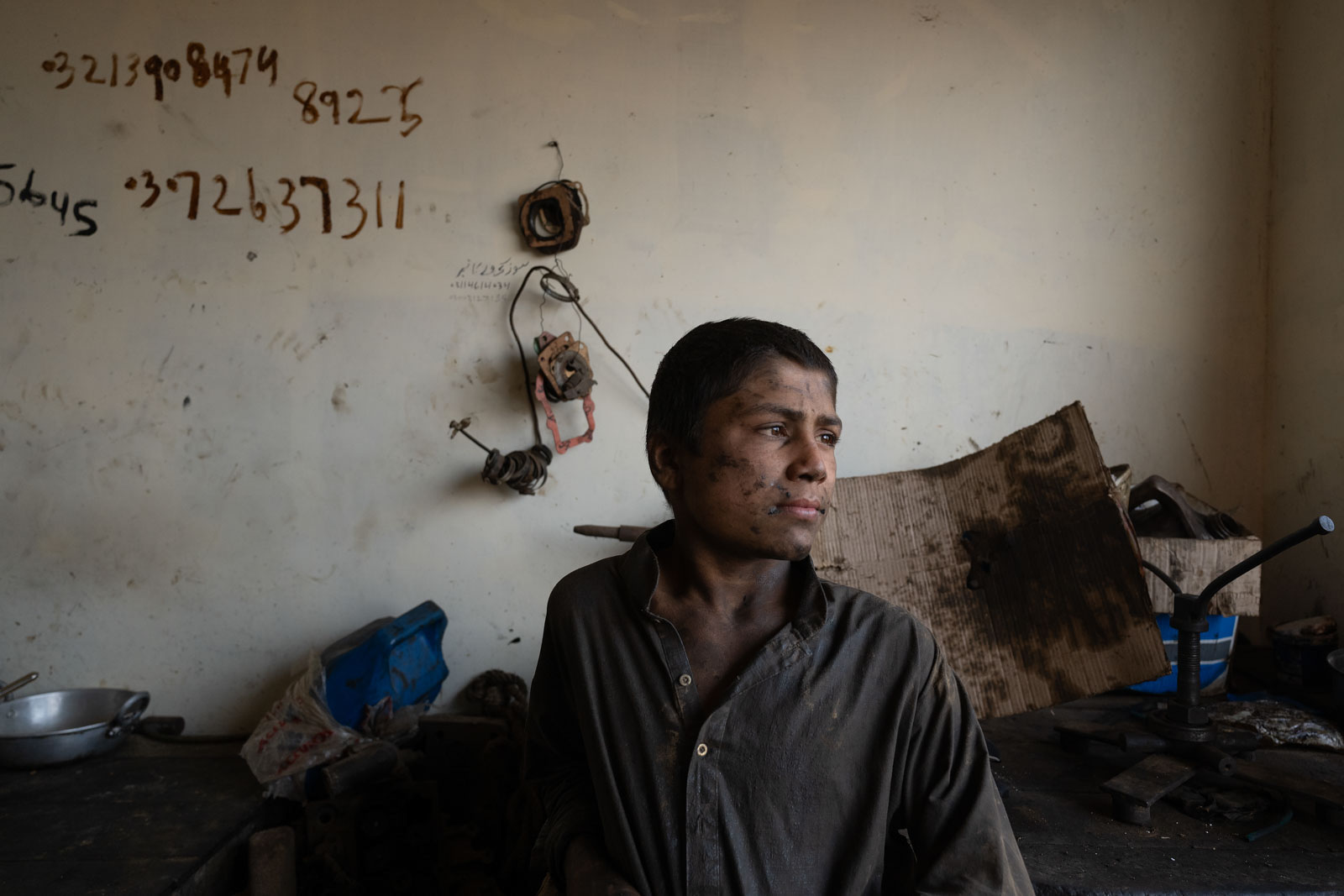
And alongside this dazzling beauty a harsher reality creeps in: in the workshops and along the routes work young people who are too young, with their hands already marked by fat and fatigue. Their gazes tell of a childhood compressed between duty and need, between the color of dreams painted on trucks and the dust of the road that swallows them.
These trucks talk. They speak of pride and creativity, but also of imbalances and contradictions. They are works of art in motion that carry with them not only goods, but human stories: of those who drive them, of those who build them, and of those who grow too quickly in the shadow of their glittering decorations.
Cattedrali su ruote
Sulle strade polverose del Pakistan, i camion non sono semplici mezzi di trasporto: sono cattedrali mobili, manifesti di identità e resistenza. Prima ancora di partire, nascono nei cortili delle officine, dove mani esperte – dei veri artisti contesi tra i diversi ‘laboratori’ – trasformano lamiere anonime in superfici vive. Strati di vernice si sovrappongono come racconti: fiori, uccelli, santi, occhi che vigilano. Ogni dettaglio è inciso, dipinto, applicato con una pazienza artigianale che sfida il tempo e la fatica.
Questa trasformazione ha un prezzo altissimo: decorare un camion può costare tra i 10.000 e i 20.000 dollari, una cifra enorme in rapporto ai guadagni medi. È un investimento che diventa orgoglio, identità, segno distintivo sulle strade.
Poi arriva il carico. Sacchi, canne, merci di ogni tipo si accumulano fino a sfidare l’equilibrio, fino a traboccare oltre ogni logica. Il camion diventa una montagna in movimento, un corpo sovraccarico che avanza lento, oscillante, ma ostinato. È il peso dell’economia informale, della necessità, della sopravvivenza.
E accanto a questa bellezza abbagliante si insinua una realtà più dura: nelle officine e lungo le rotte lavorano ragazzi troppo giovani, con le mani già segnate dal grasso e dalla fatica. I loro sguardi raccontano un’infanzia compressa tra il dovere e il bisogno, tra il colore dei sogni dipinti sui camion e la polvere della strada che li inghiotte.
Questi camion parlano. Parlano di orgoglio e creatività, ma anche di squilibri e contraddizioni. Sono opere d’arte in movimento che portano con sé non solo merci, ma storie umane: di chi li guida, di chi li costruisce, e di chi cresce troppo in fretta all’ombra delle loro decorazioni scintillanti.