Elisabetta Nottola – Sciamma
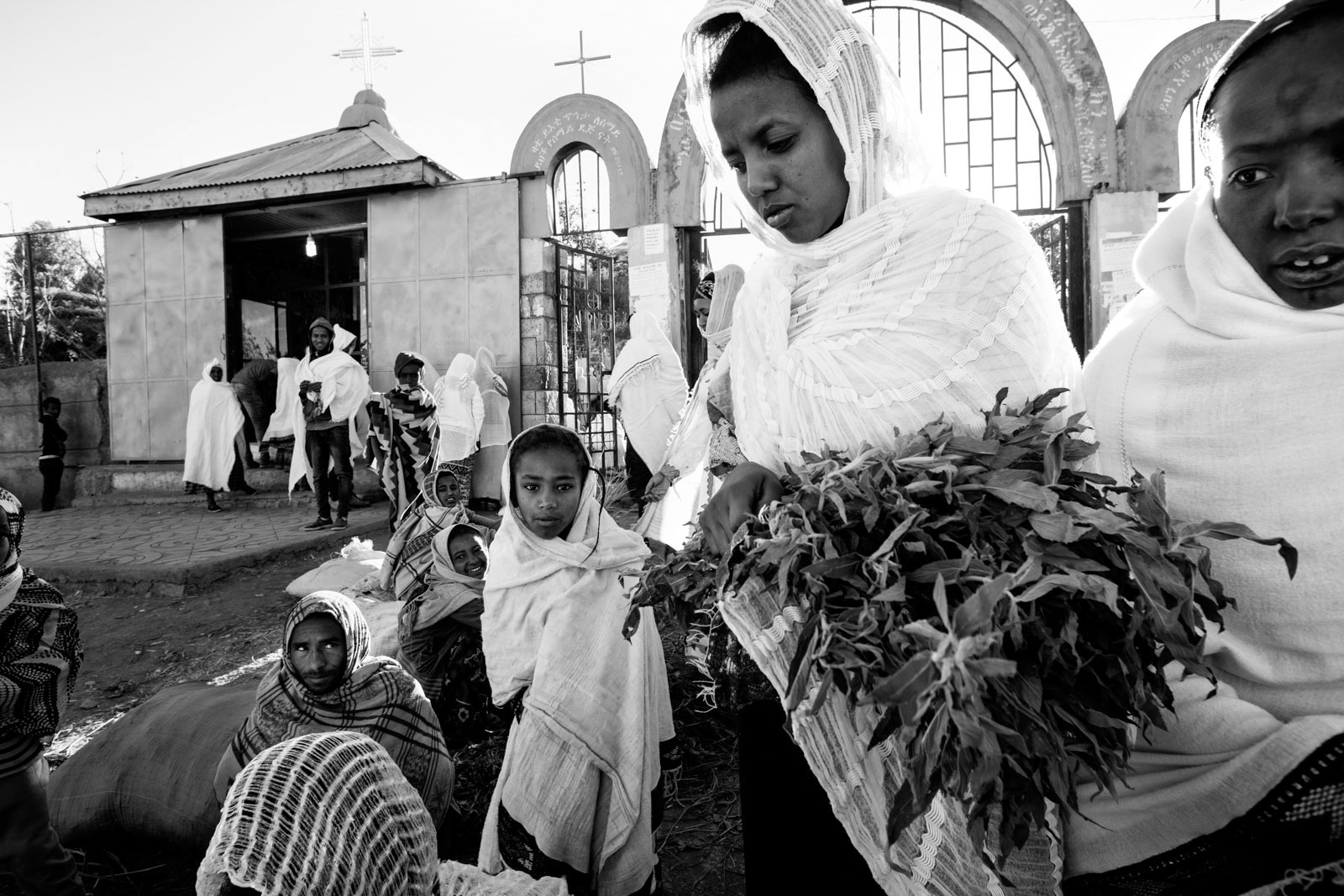
Shamma is the traditional shawl made of light white cotton worn by both men and women and is the symbol of the Christian populations of the Ethiopian highlands. Thrown over the shoulders, it protects from the cold and dust, functions as a headdress, and is a sign of elegance and dignity. It covers the faithful during night vigils in churches, but also in daily life, which is heavily regulated by religion, 60% of which is Orthodox Christian.
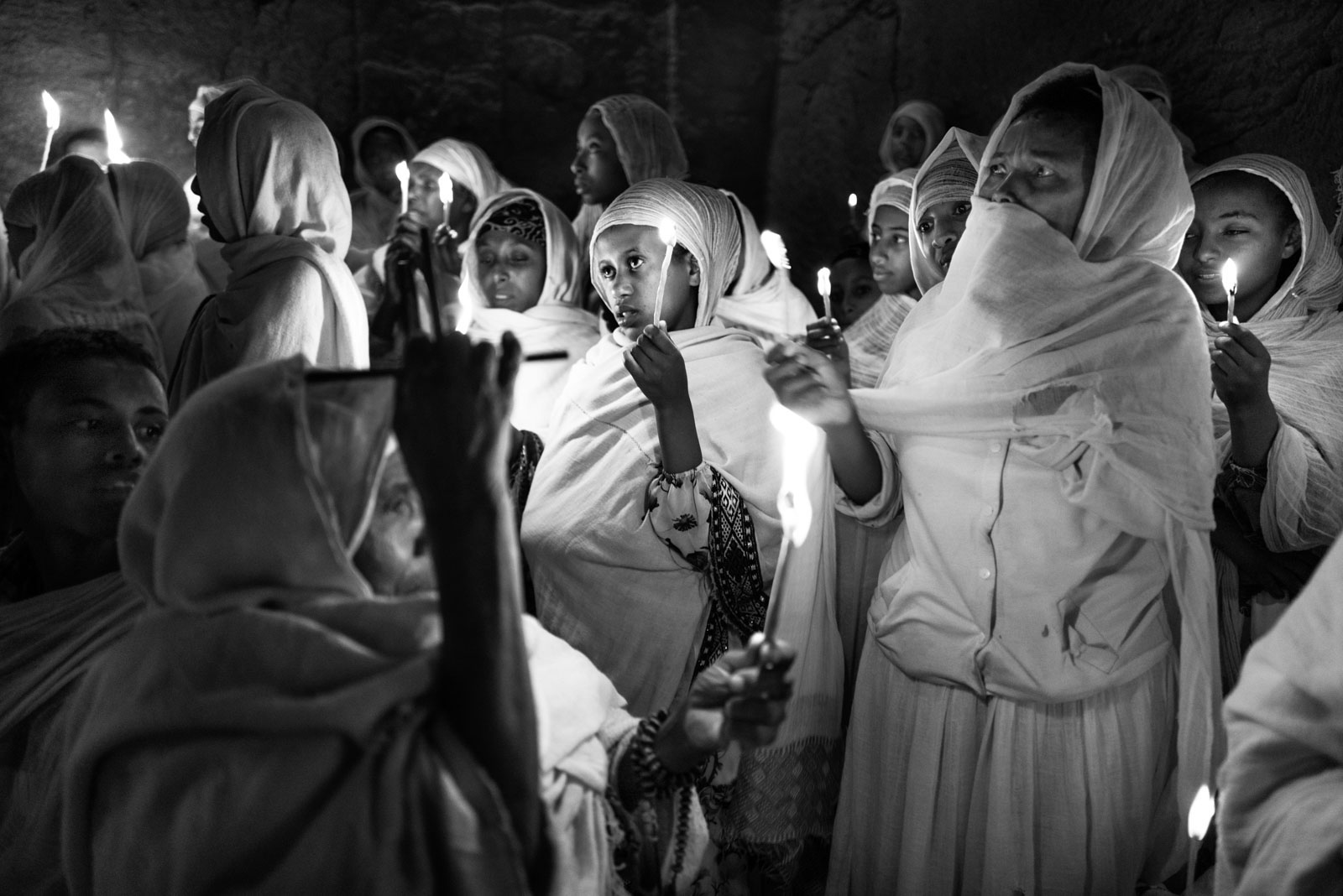
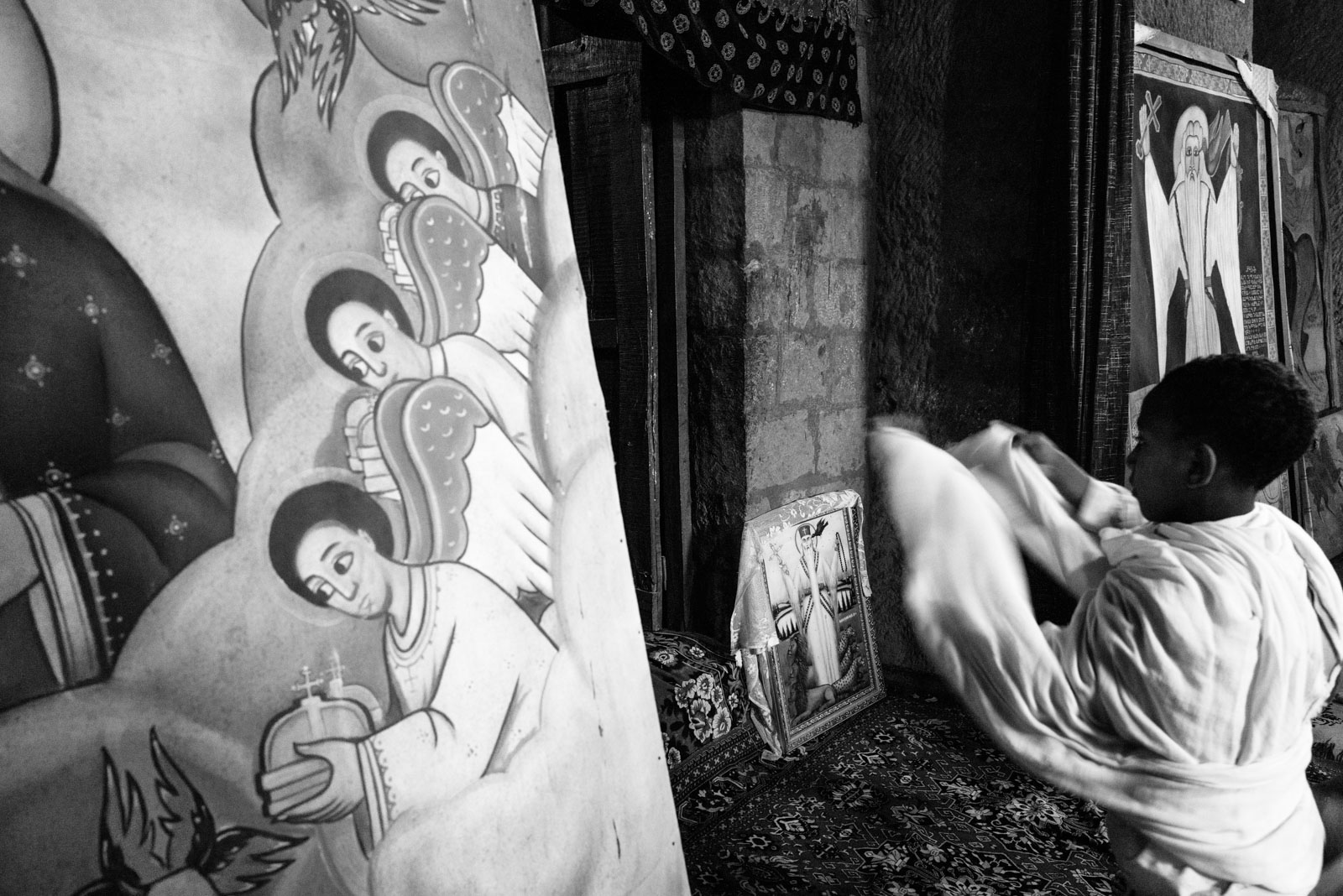
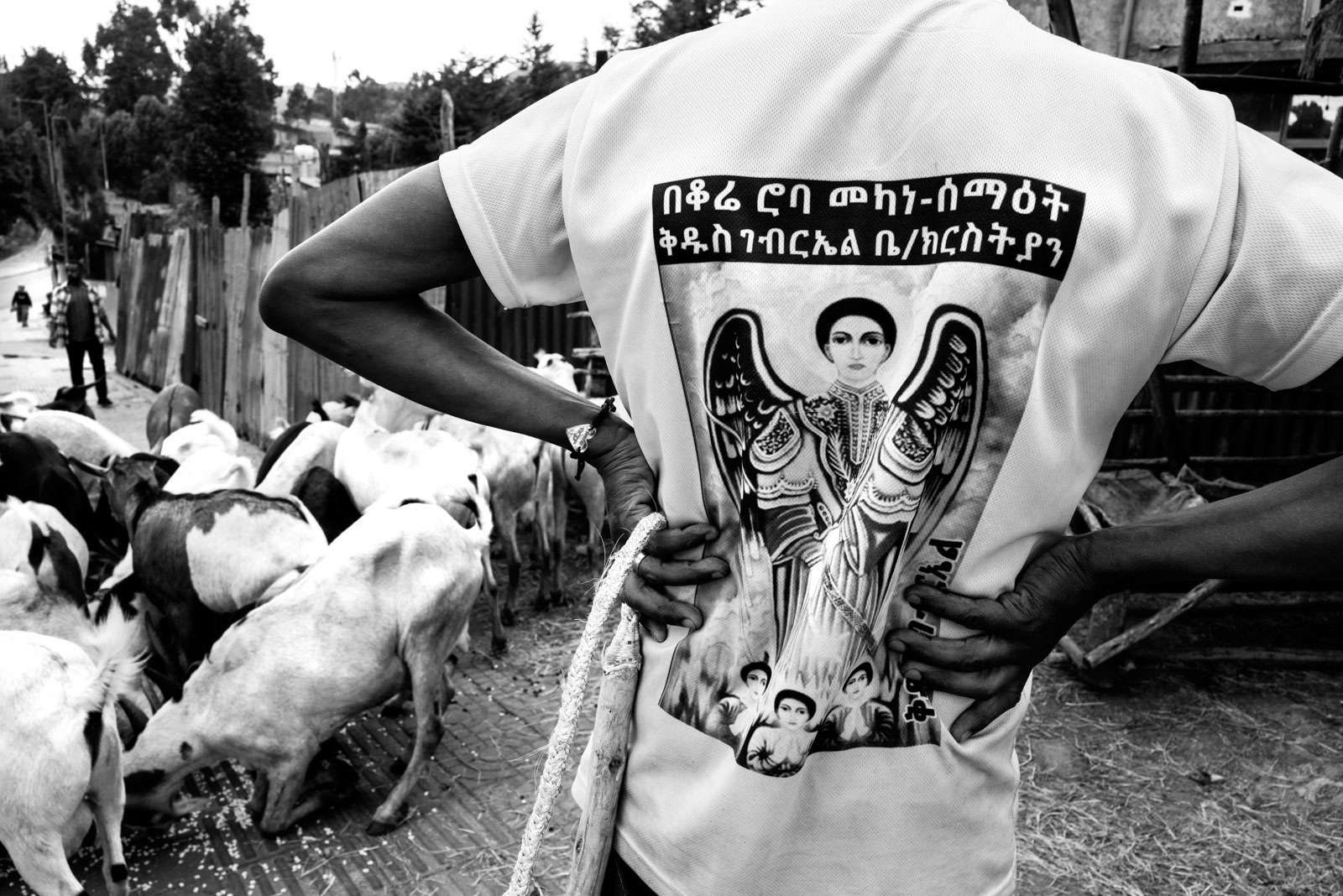
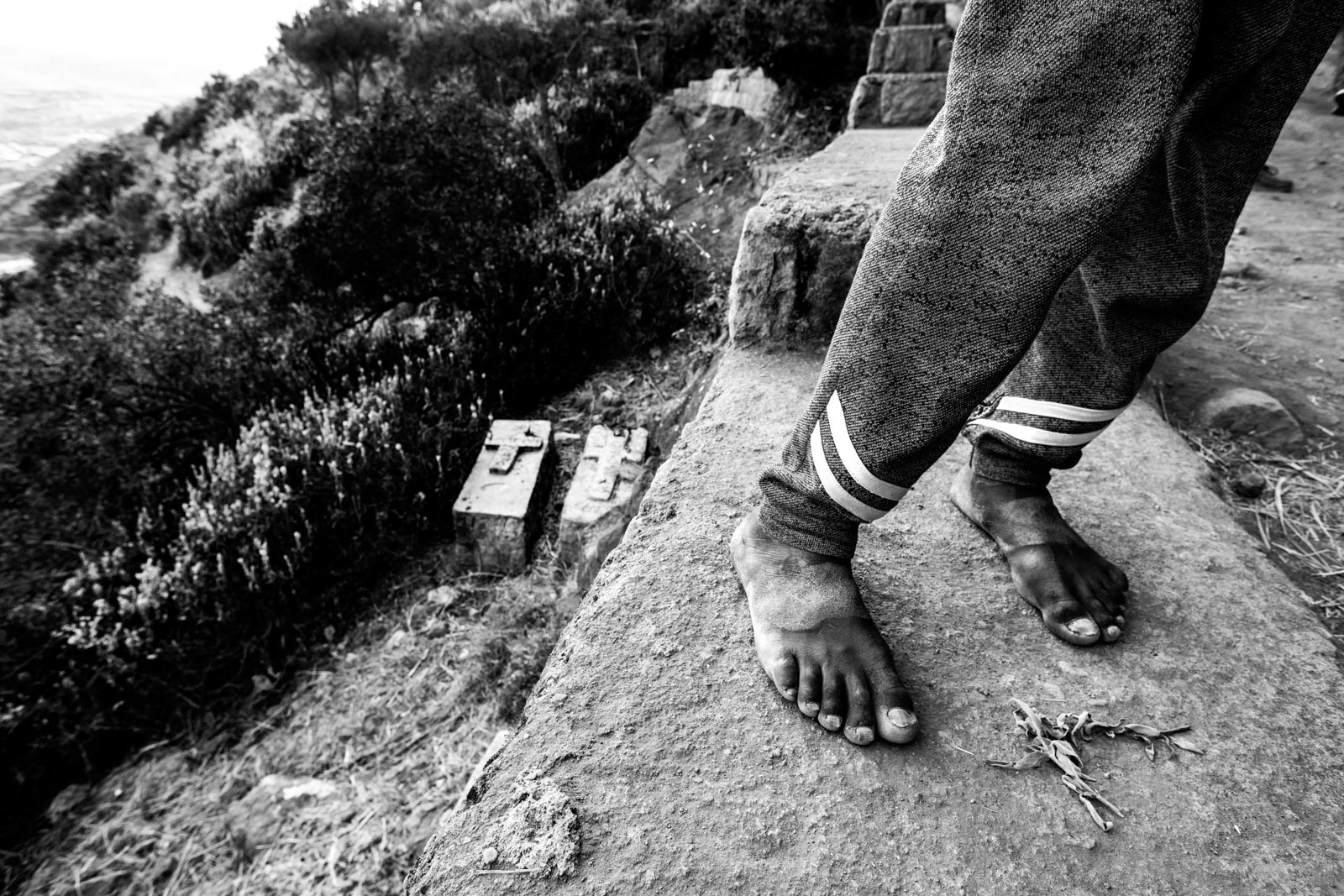
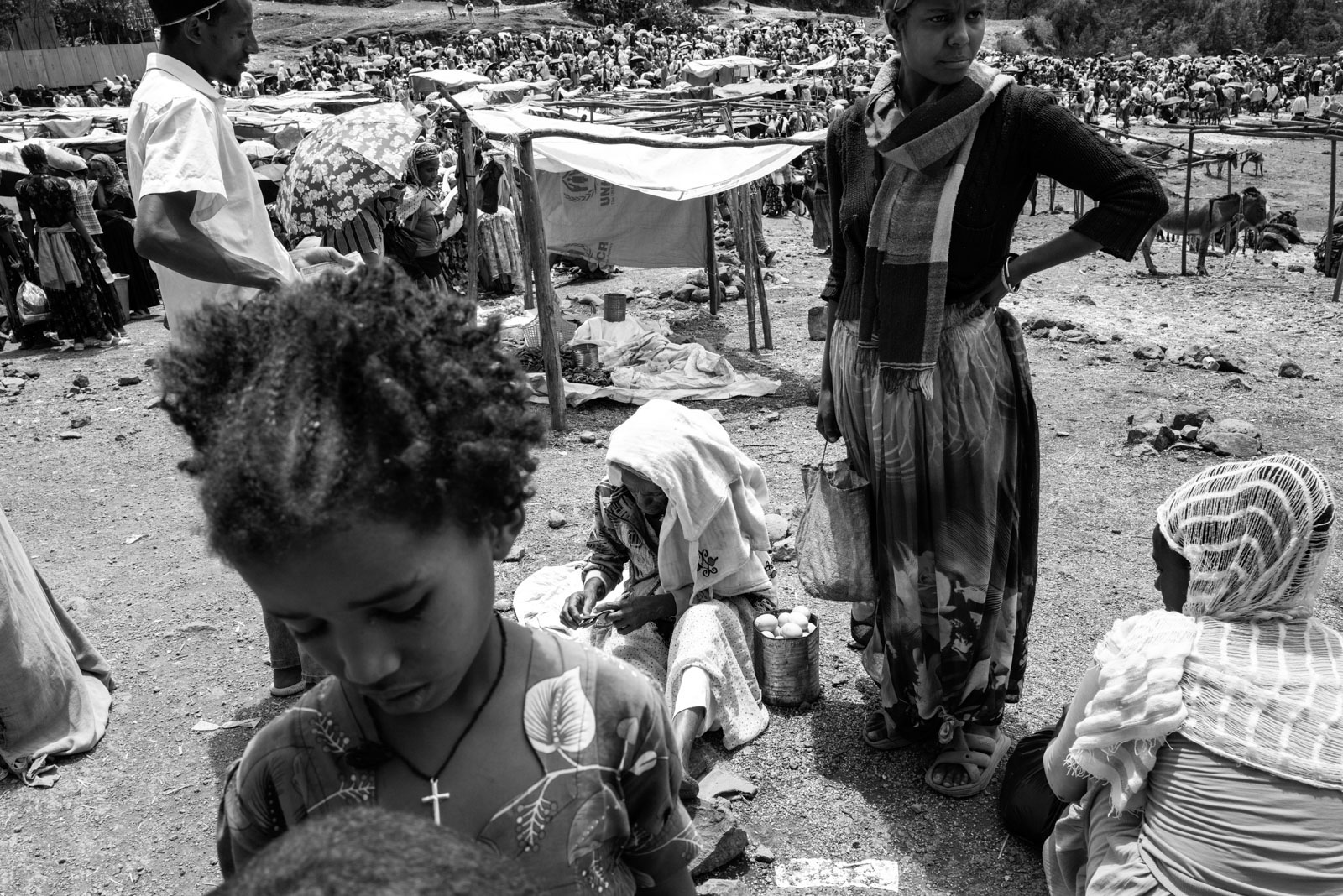
On the northern plateau, during the night vigils of Christmas and Easter (Genna and Fasika), in the thousand-year-old churches of Lalibela, white shammas can be seen in the darkness, Caravaggio-esque figures moving in the ecstasy of prayer among candles that shine like stars in the night. In the morning, celebrations continue in the churches but then merge with the life that flows in the markets, where the millenary and rural dimension is revealed and the strong interconnection between the Christian religion and every form of human activity is clearly evident.
The culture of the plateau is a millennia-old mosaic of religious traditions, legendary historical roots, and unique agricultural practices. One of the most important activities is the cultivation of teff, an ancient grain native to Ethiopia and Eritrea, the foundation of Ethiopian cuisine and culture. The traditional process of husking teff is a fascinating ritual. Once husked, the mixture of seeds and straw is tossed into the air with wooden paddles to harness the wind and separate the chaff from the heavier seeds, creating a luminescent dust that, when held up to the light, can resemble stardust.
Shamma
Shamma è il tradizionale scialle in leggero cotone bianco indossato sia dagli uomini che dalle donne, simbolo delle popolazioni cristiane dell’acrocoro etiopico. Gettato sulle spalle, protegge dal freddo, dalla polvere, funziona da copricapo, è segno di eleganza e dignità, copre i fedeli nelle notti di veglia nelle chiese, ma anche nella vita quotidiana fortemente regolata dalla religione, per il 60% cristiana ortodossa.
Sull’altopiano del nord durante le veglie notturne del Natale e della Pasqua (Genna e Fasika), nelle chiese millenarie di Lalibela si vedono shamme bianche nel buio, figure caravaggesche che si muovono nell’estasi della preghiera tra le candele che brillano come stelle nella notte. Al mattino le celebrazioni continuano nelle chiese ma poi si fondono con la vita che scorre nei mercati, dove la dimensione millenaria e contadina si svela e la forte interconnessione tra religione cristiana e ogni forma di attività umana è evidentissima.
La cultura dell’altopiano è un mosaico millenario di tradizioni religiose, radici storiche leggendarie ma anche pratiche agricole uniche. Una delle attività più importanti è la coltivazione del teff, cereale antichissimo originario dell’Etiopia e dell’Eritrea, alla base della cucina e della cultura etiope. Il processo tradizionale di sgranatura del teff è un rituale affascinante. Una volta sgranato, il mix di semi e paglia viene lanciato in aria con pale di legno per sfruttare il vento e separare la pula dai semi più pesanti, creando un pulviscolo luminescente che in controluce può sembrare polvere di stelle.