Giuseppe Granata – Zanzibar, moon and sea time
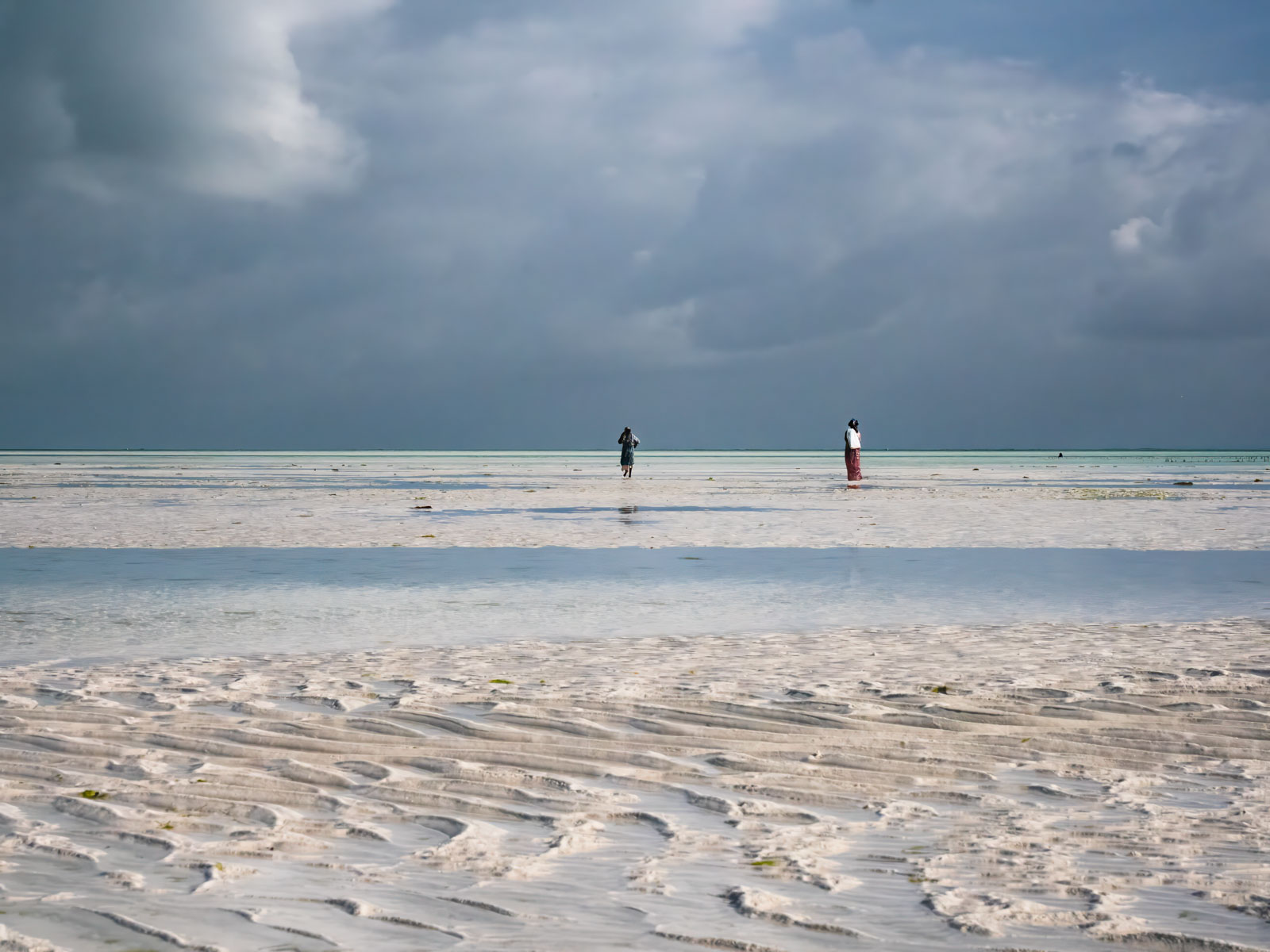
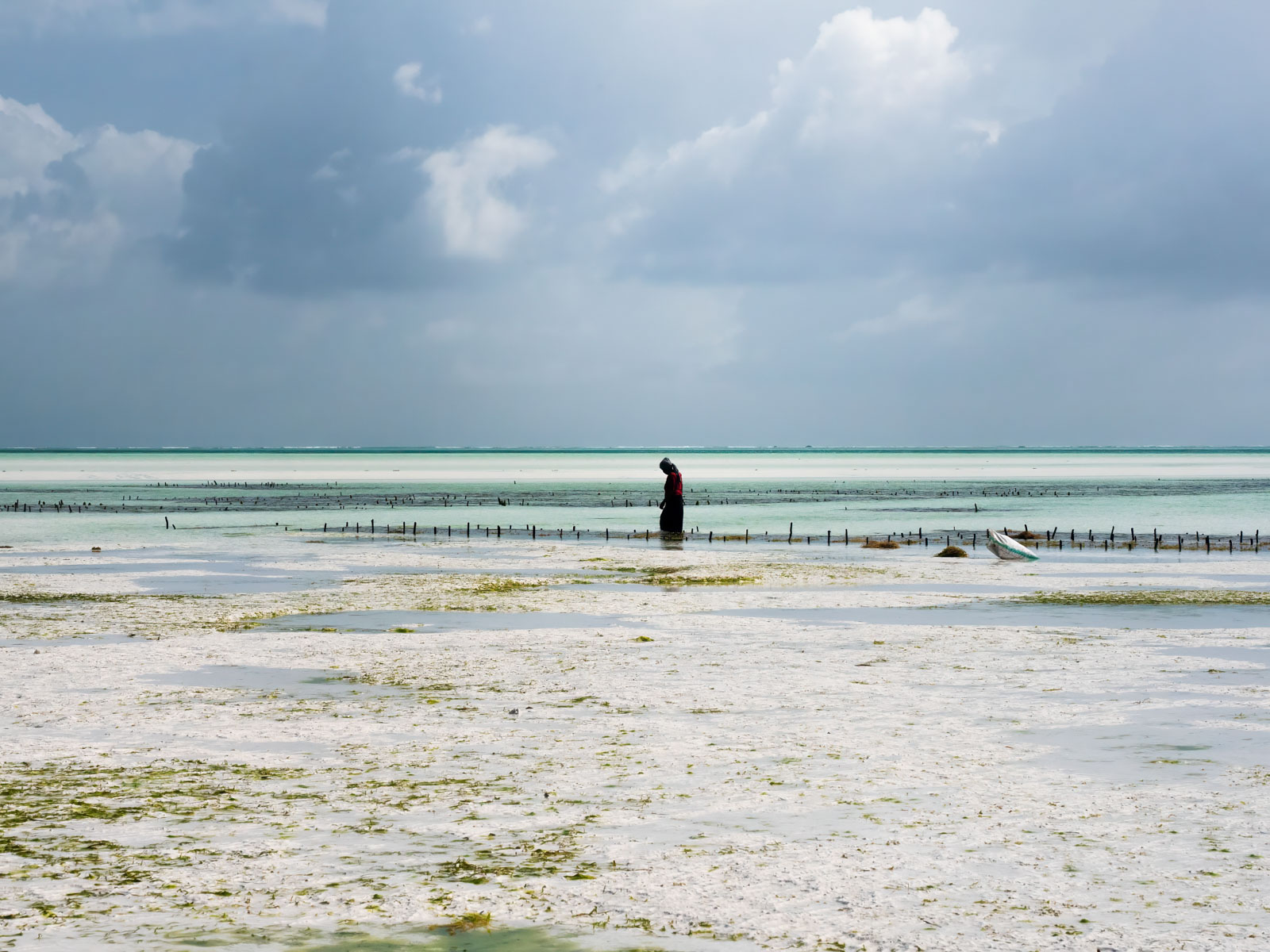
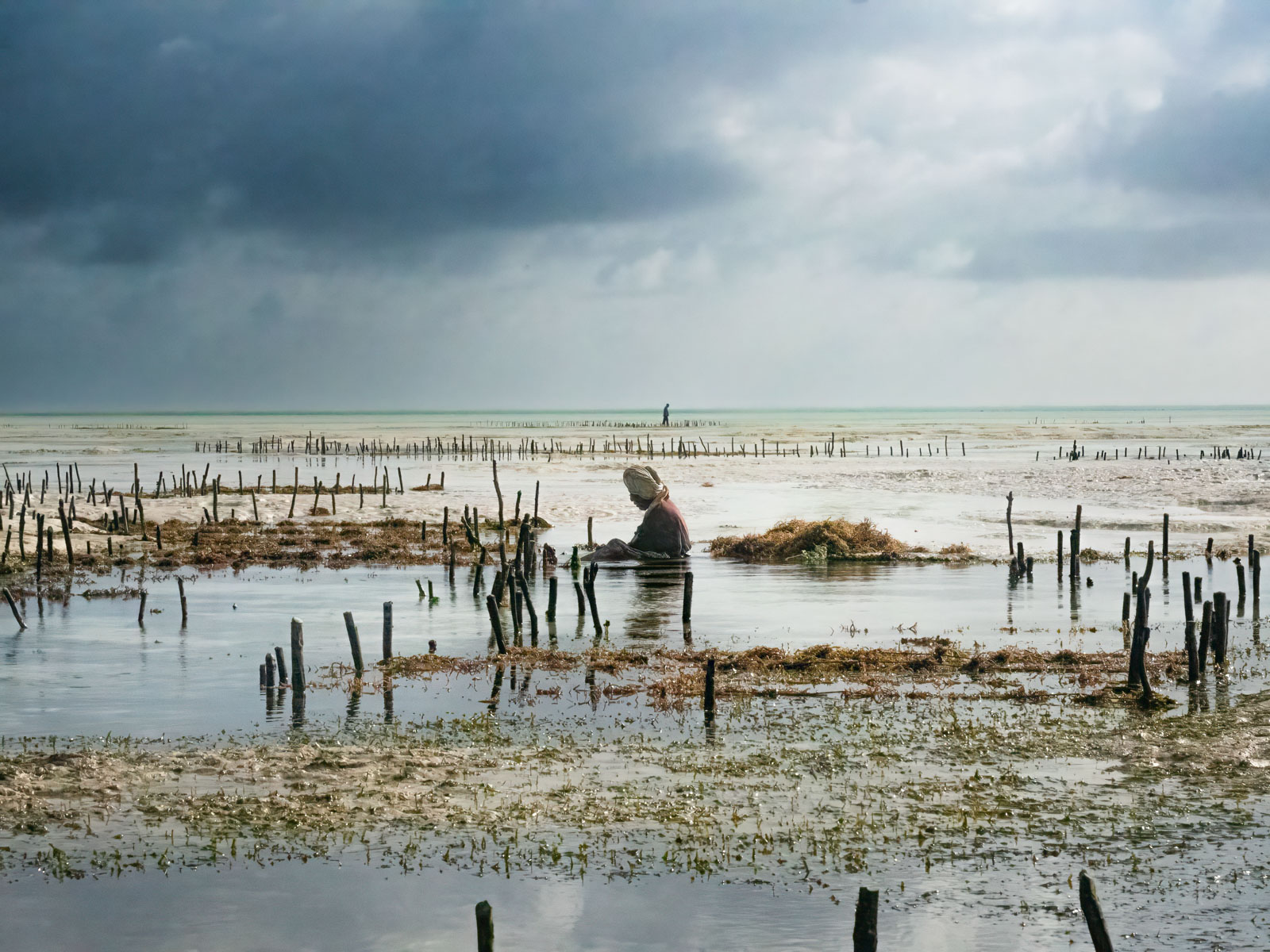
On the coasts of Zanzibar, the horizon is a relative concept, and time is not marked by the sun, but by the cycles of the moon. It is the lunar force that governs the life of the island, receding the Indian Ocean for hundreds of meters and revealing a liquid plain reminiscent of a white desert. In this suspended space, the residual water fragments into channels and pools with continuous shades: from coral white to turquoise, to teal and cobalt blue. The sky is reflected on this surface, eliminating all boundaries, in a dilated atmosphere that follows only the breath of the sea.
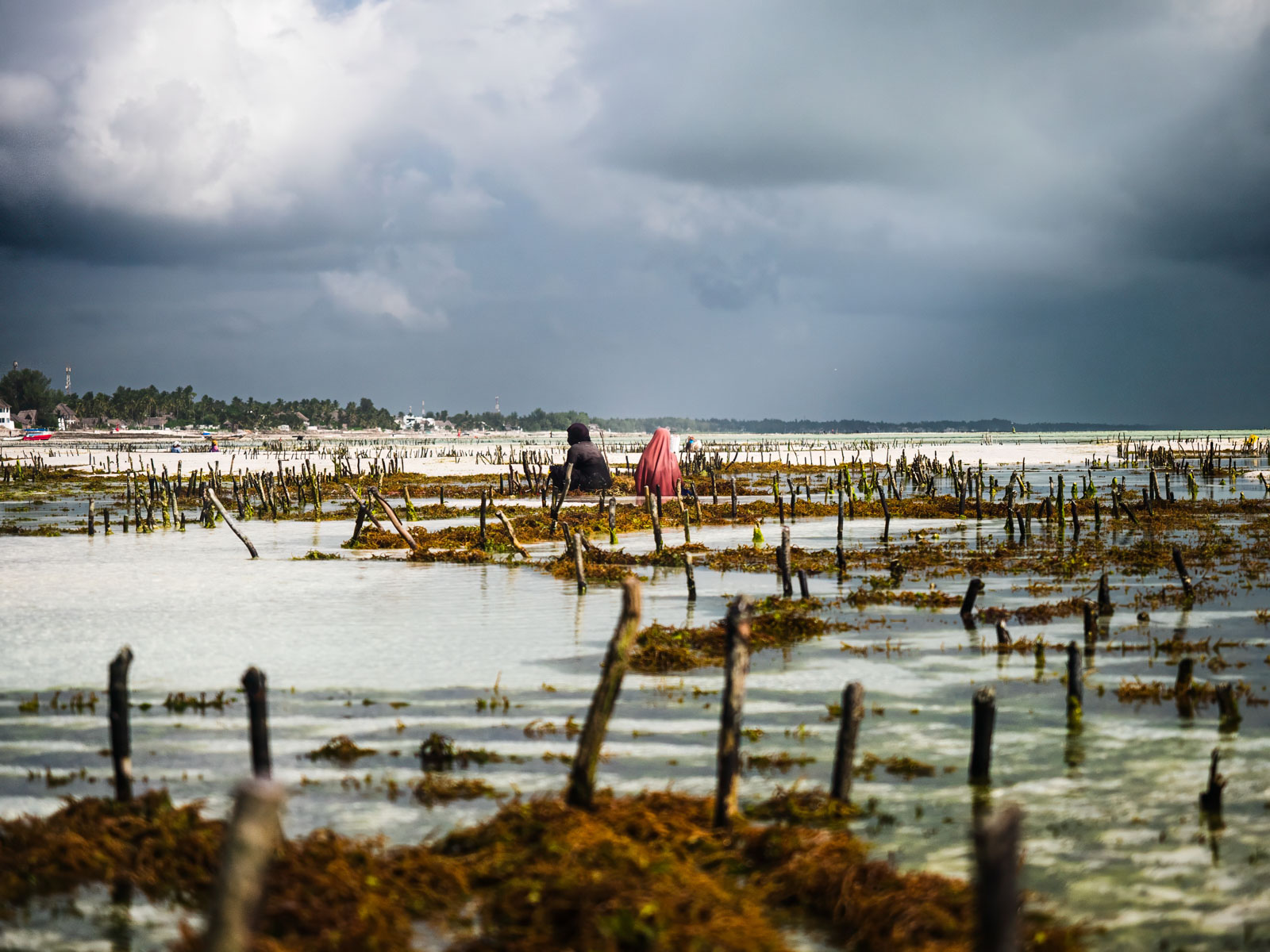
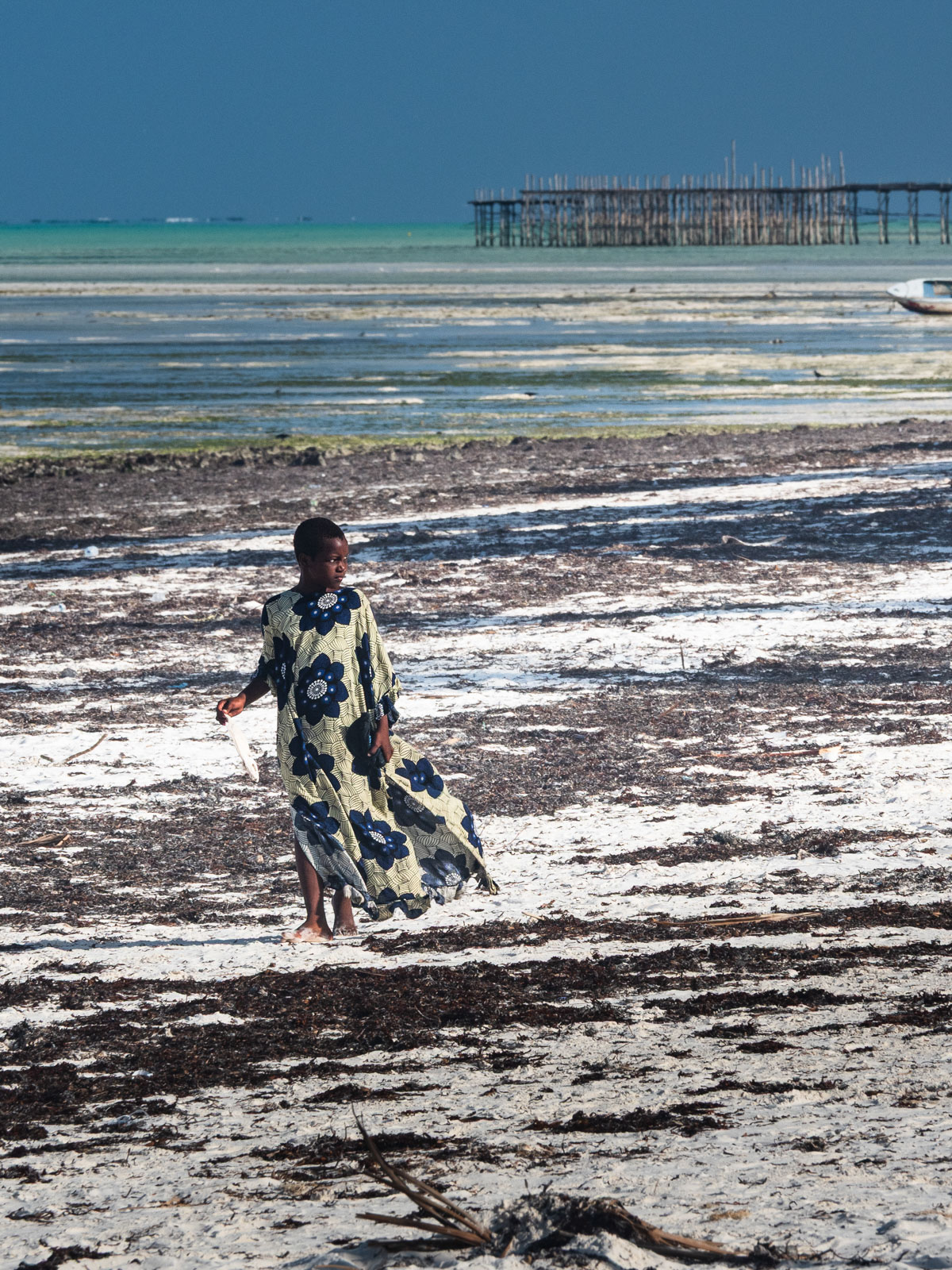
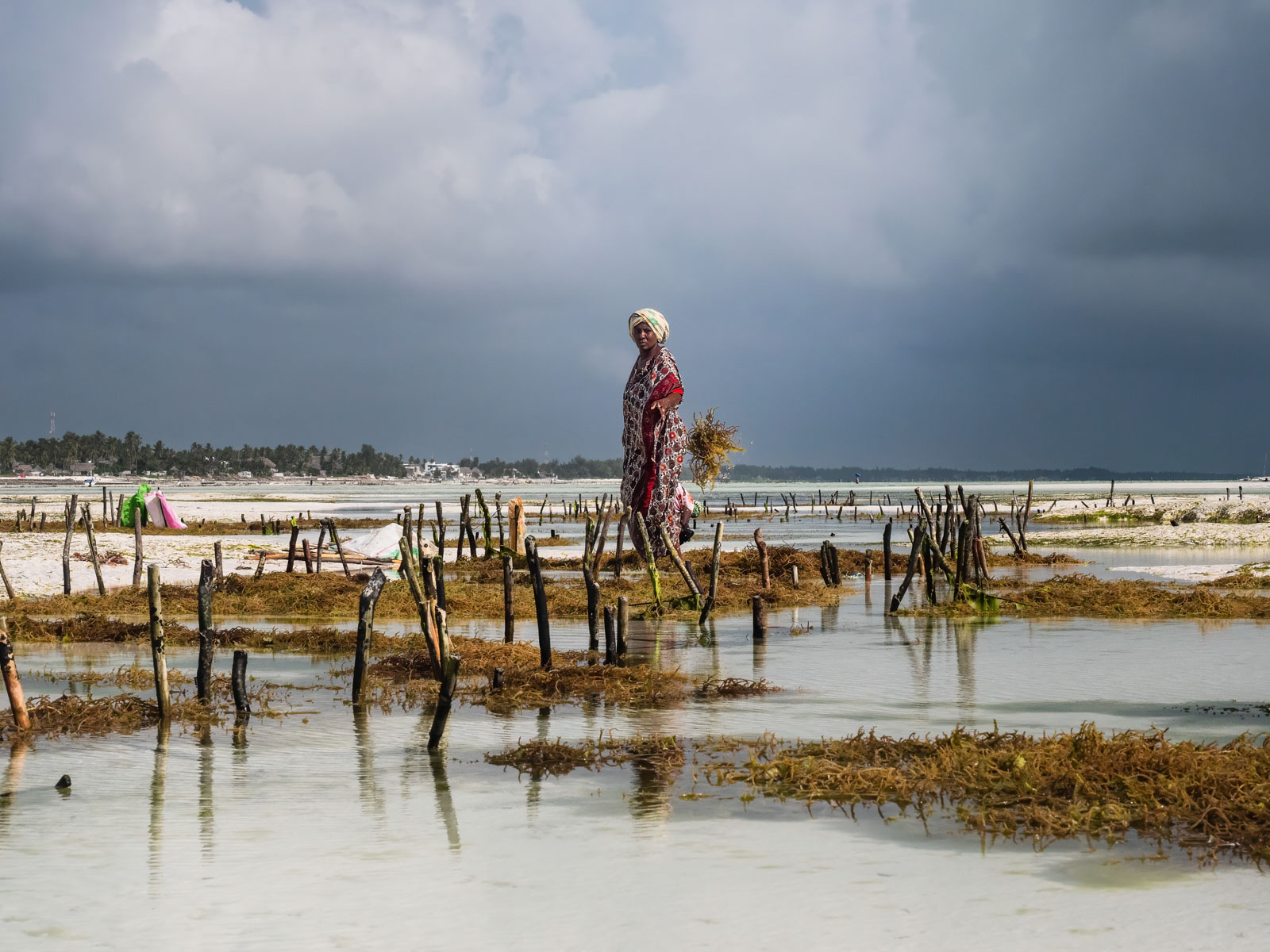
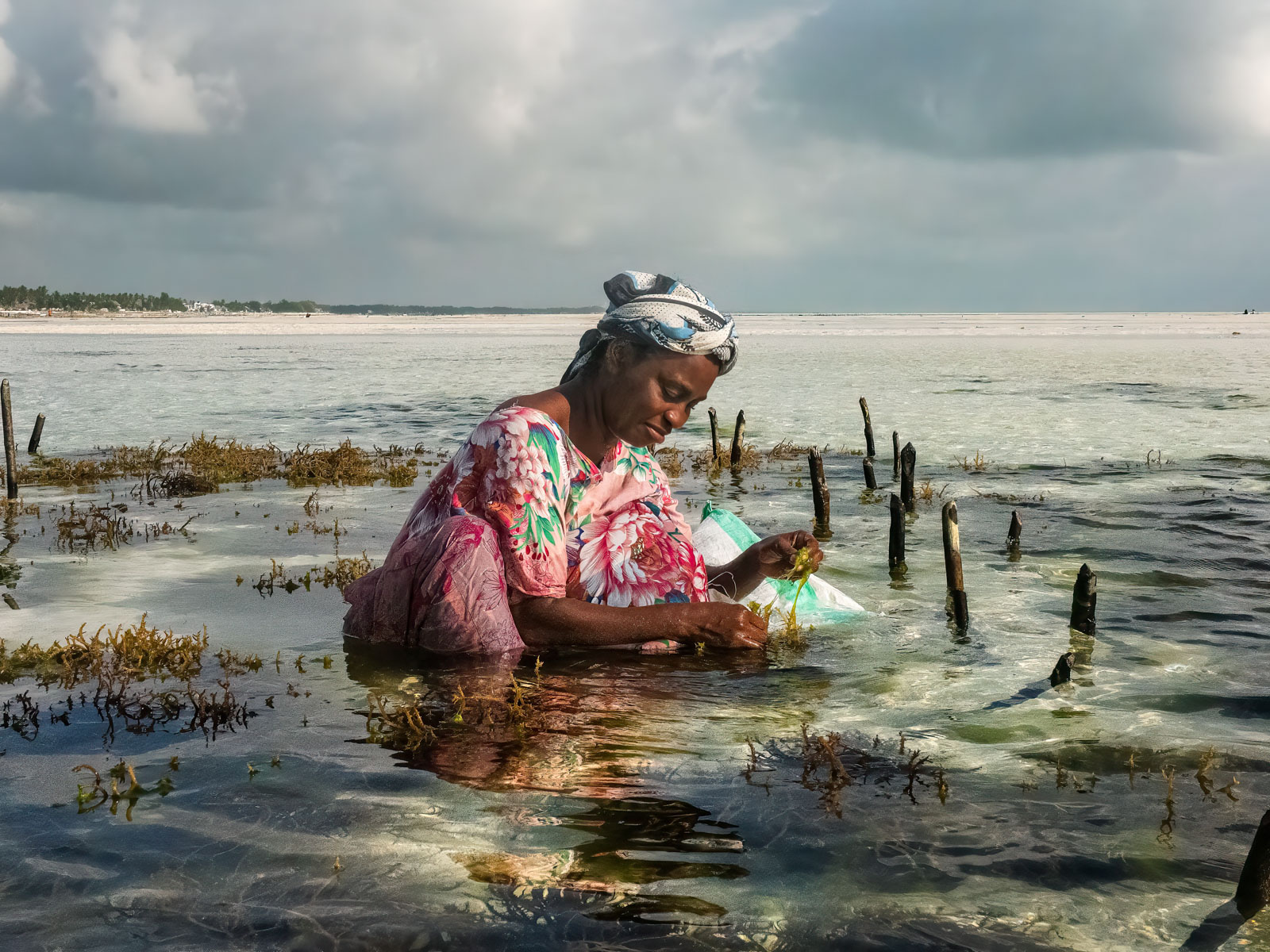
When the moon decrees low tide, this white desert is populated with life. Where the water was deep, seaweed plantations emerge, the “green gold” of the island. Women move ethereally in this limbo. The visual contrast is stark: the delicate monochrome of the sand is broken up by the saturated colors of kangas and kitenge, traditional women’s dresses. Patches of color float on the light backdrop, following the rhythm of a daily ritual dictated by the sky.
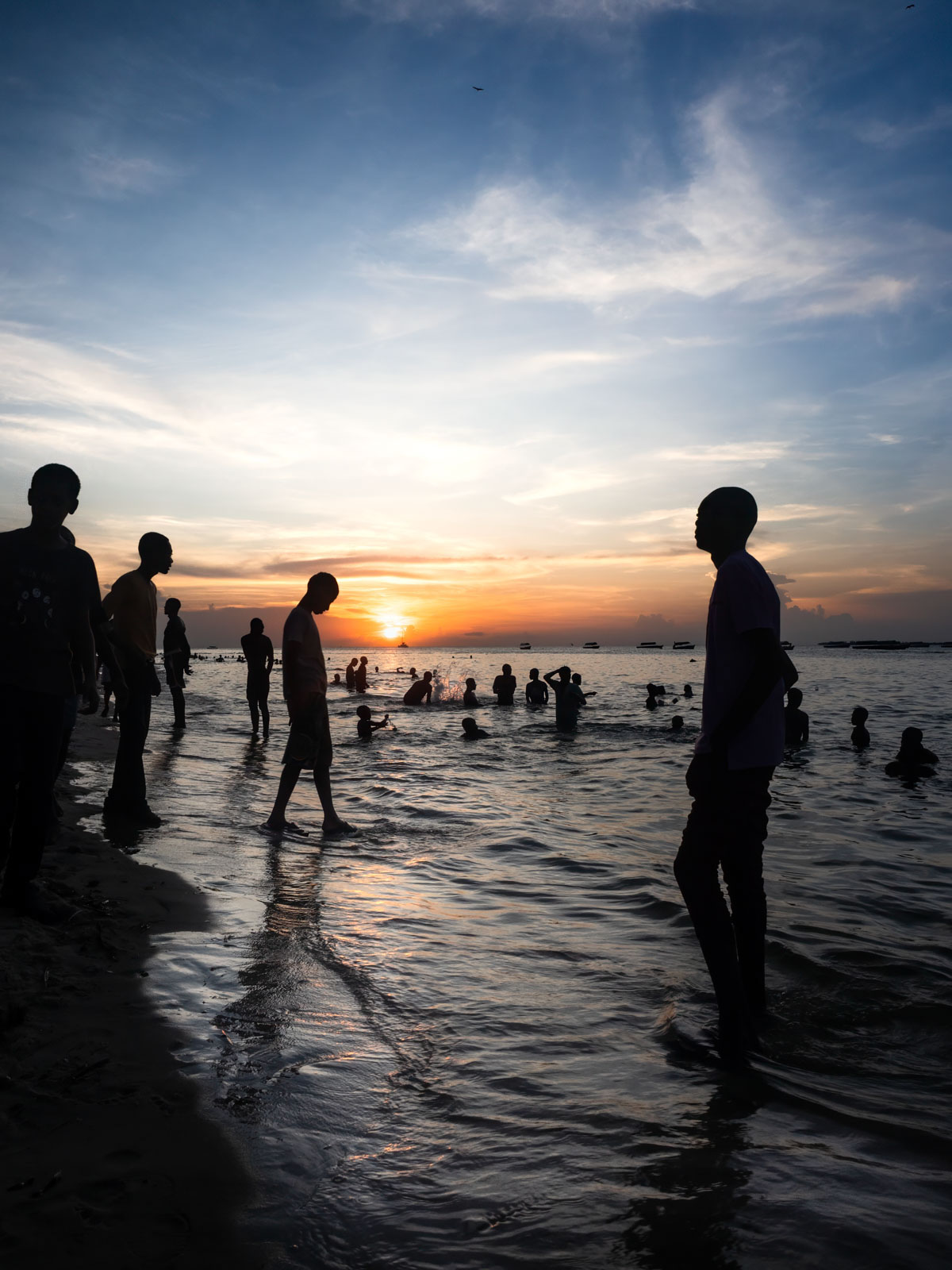
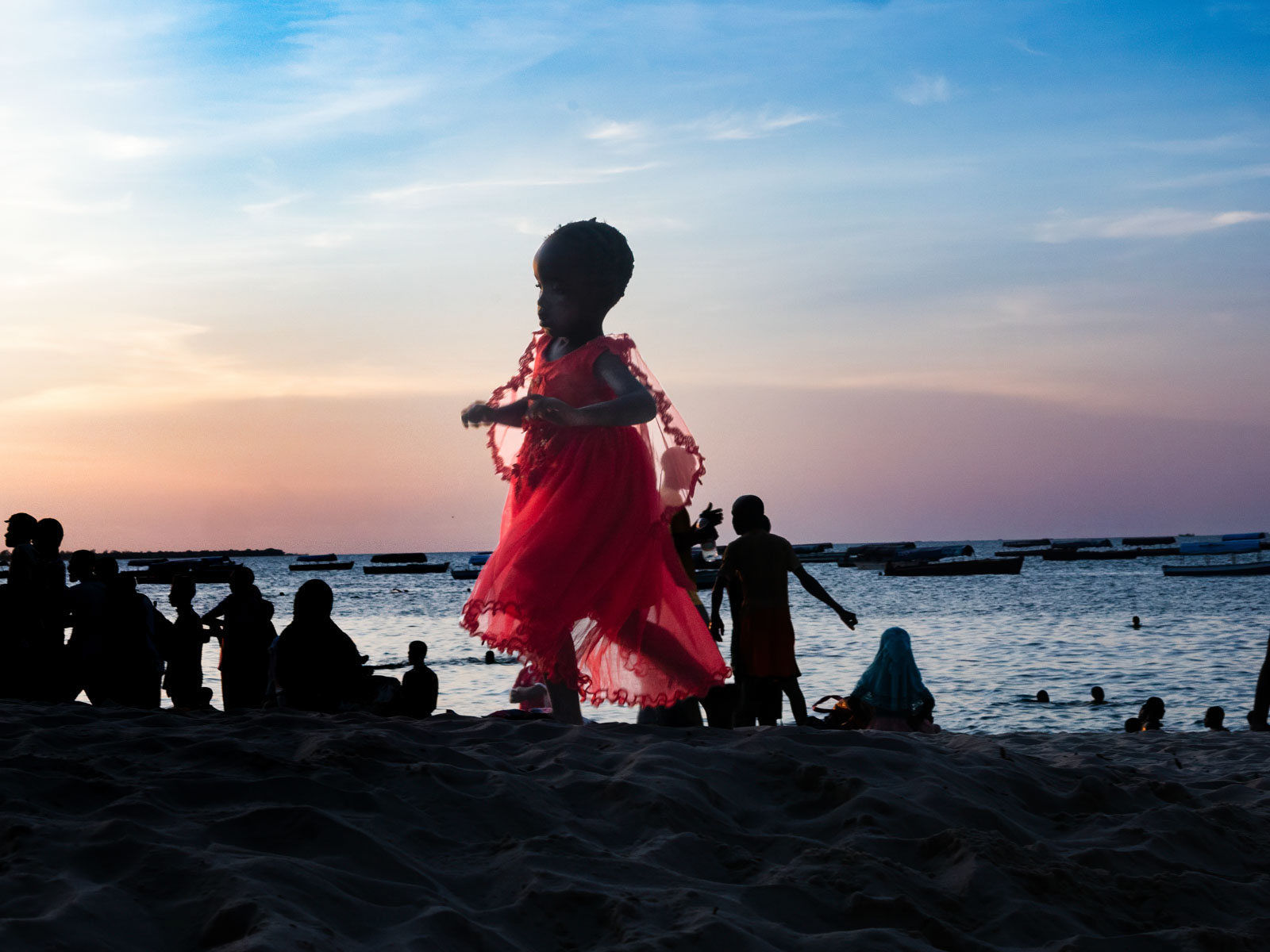
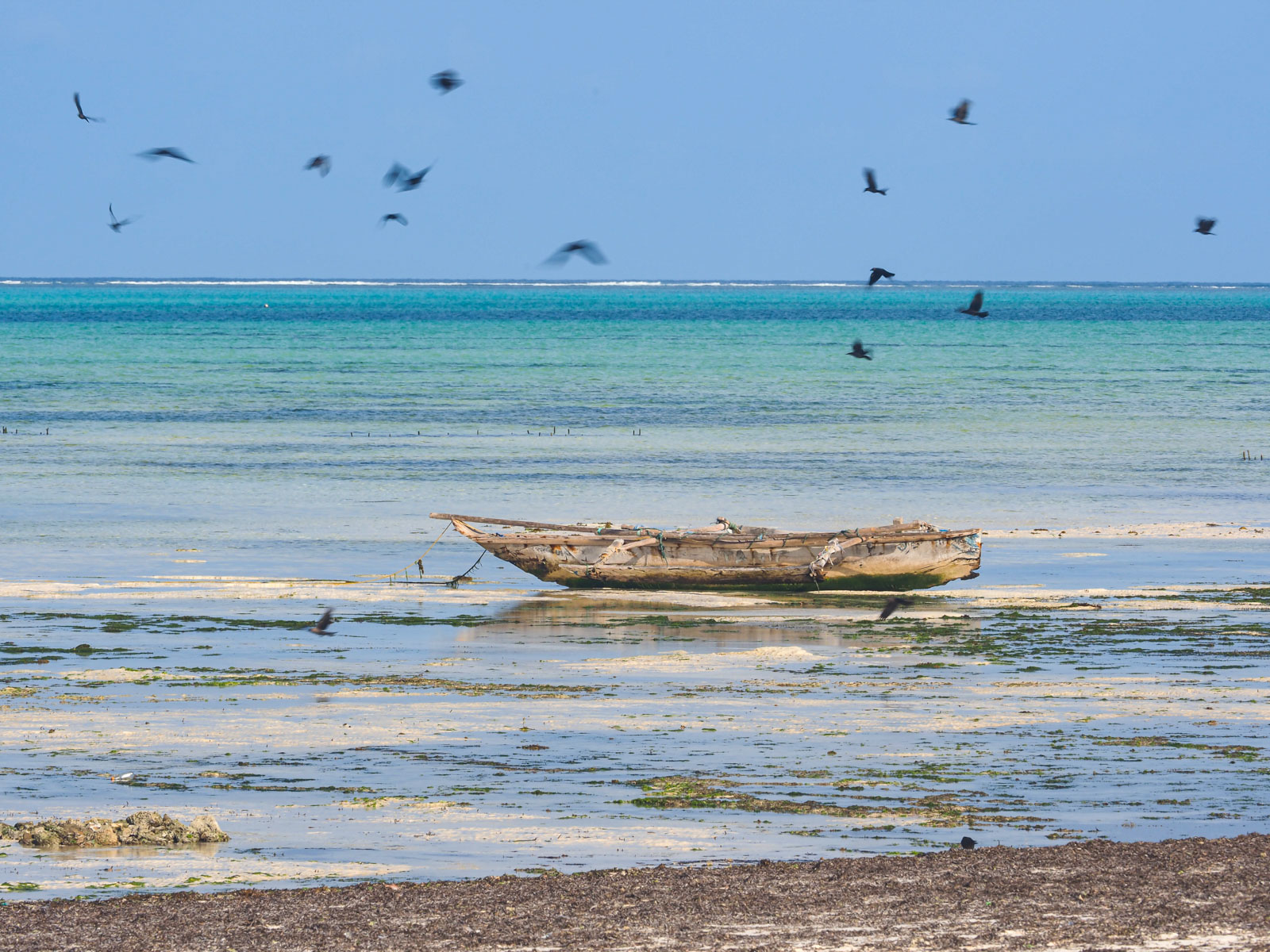
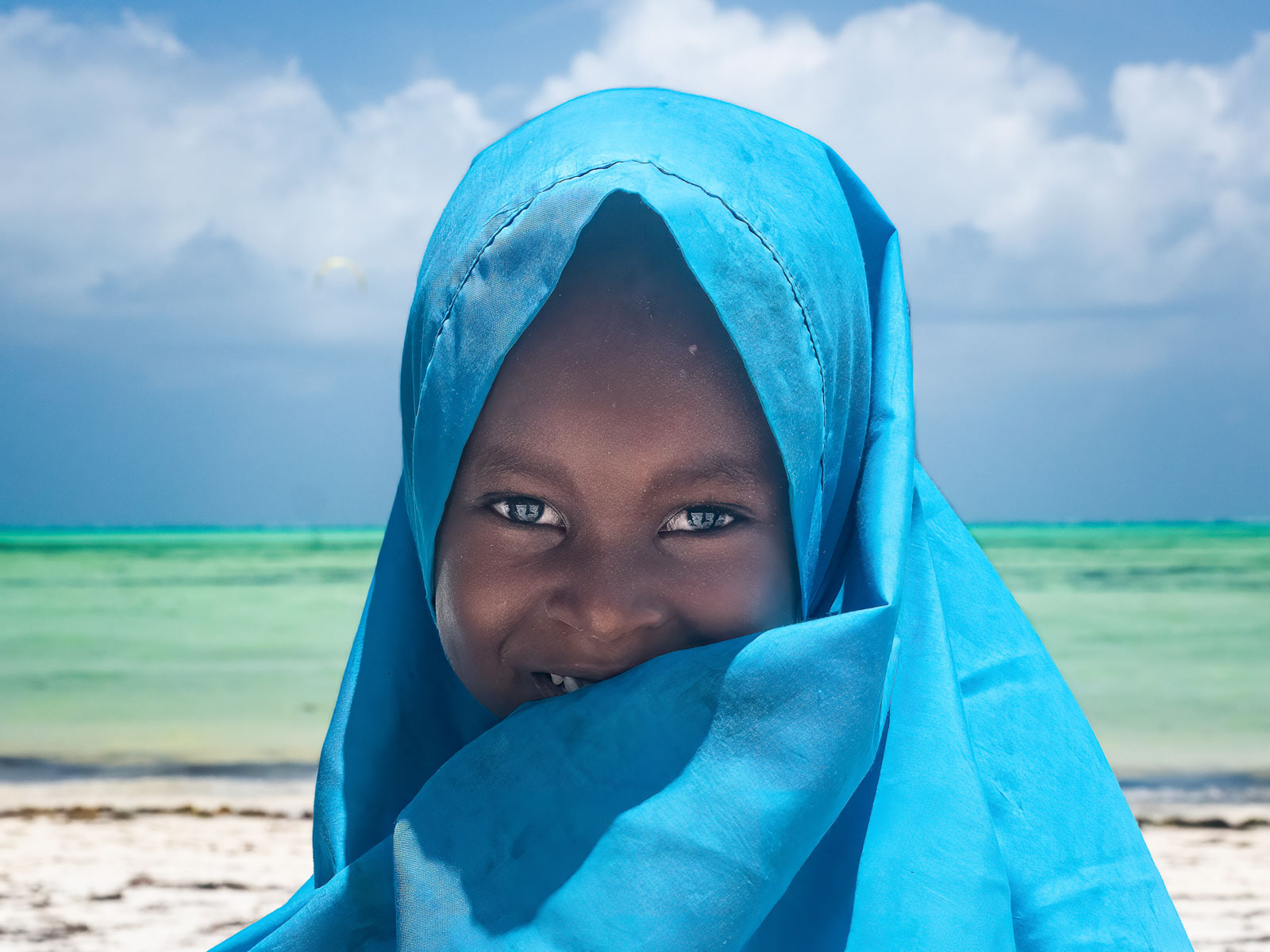
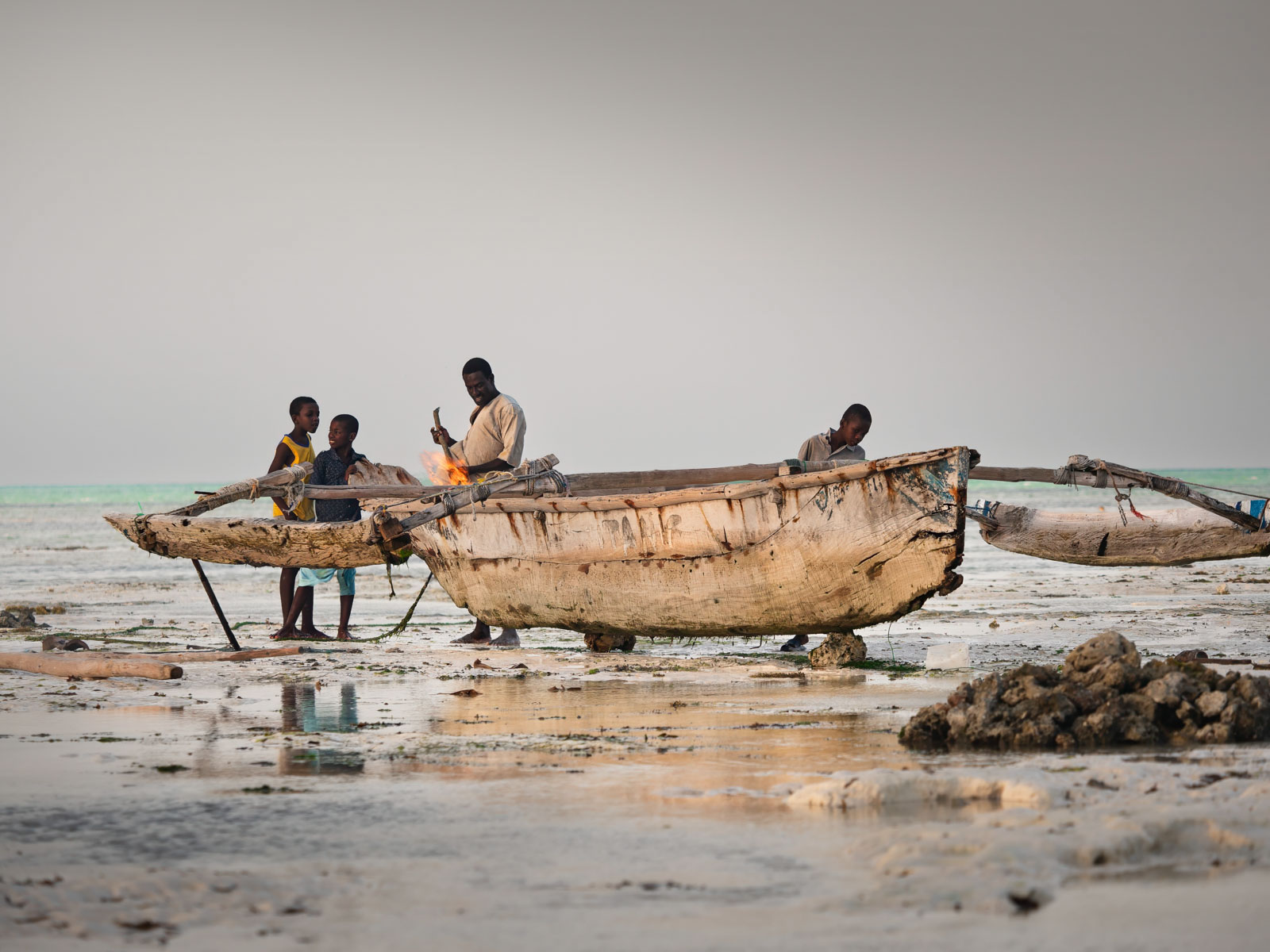
But the beach is not only inhabited by seeweed mamas, it is not a simple backdrop for tourists but a public square, an extension of the house. Here the dhows, the traditional boats, are repaired, the catch is cleaned and you find yourself talking. A visceral bond that the children inherited immediately: when they left school they ran on the shore in uniform, transforming the sand freed from the sea and the shallow water into a play area.
Zanzibar, il tempo della luna e del mare
Sulle coste di Zanzibar l’orizzonte è un concetto relativo, e il tempo non è scandito dal sole, ma dai cicli della luna. È la forza lunare a governare la vita dell’isola, ritirando l’Oceano Indiano per centinaia di metri e svelando una pianura liquida che ricorda un deserto bianco. In questo spazio sospeso, l’acqua residua si frammenta in canali e pozze dalle sfumature continue: dal bianco corallino al turchese, fino al verde acqua e al blu cobalto. Il cielo si specchia su questa superficie azzerando ogni confine, in un’atmosfera dilatata che segue unicamente il respiro del mare.
Quando la luna decreta la bassa marea, questo deserto bianco si popola di vita. Laddove l’acqua era profonda affiorano le piantagioni di alghe, l'”oro verde” dell’isola. Le donne si muovono eteree in questo limbo. Il contrasto visivo è netto: la delicata monocromia della sabbia viene spezzata dai colori saturi dei kanga e dei kitenge, gli abiti tradizionali femminili. Macchie di colore fluttuano sul fondale chiaro, seguendo il ritmo di un rituale quotidiano dettato dal cielo.
Ma la spiaggia non è abitata solo dalle seeweed mamas, non rappresenta un semplice fondale per turisti bensì una piazza pubblica, un’estensione della casa. Qui si riparano i dhow, le barche tradizionali, si pulisce il pescato e ci si ritrova a parlare. Un legame viscerale che i bambini ereditano da subito: all’uscita da scuola corrono sulla riva in divisa, trasformando la sabbia liberata dal mare e l’acqua bassa in un’area giochi.