Carlo Bevilacqua e Alessandra De Vito – Dau Mau
As in many other traditional cultures, in Vietnam too the Đạo Mẫu — the Religion of the Divine Mother — represents an emblematic example of how spirituality can welcome and celebrate gender fluidity and sexual diversity. Widespread especially in the north of the country, this popular cult is based on the veneration of the Divine Mothers, goddesses who embody the forces of nature, fertility, protection and healing.
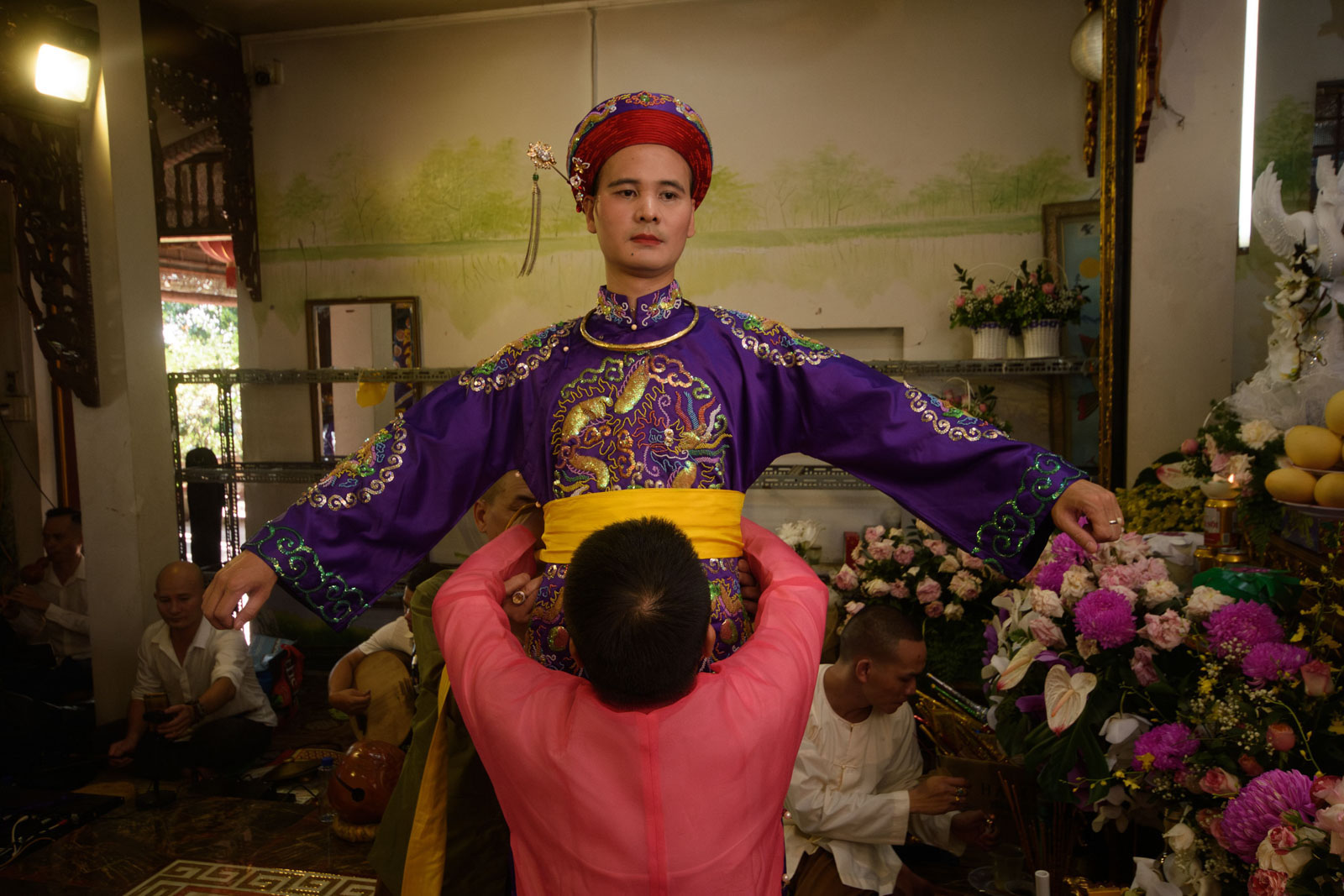
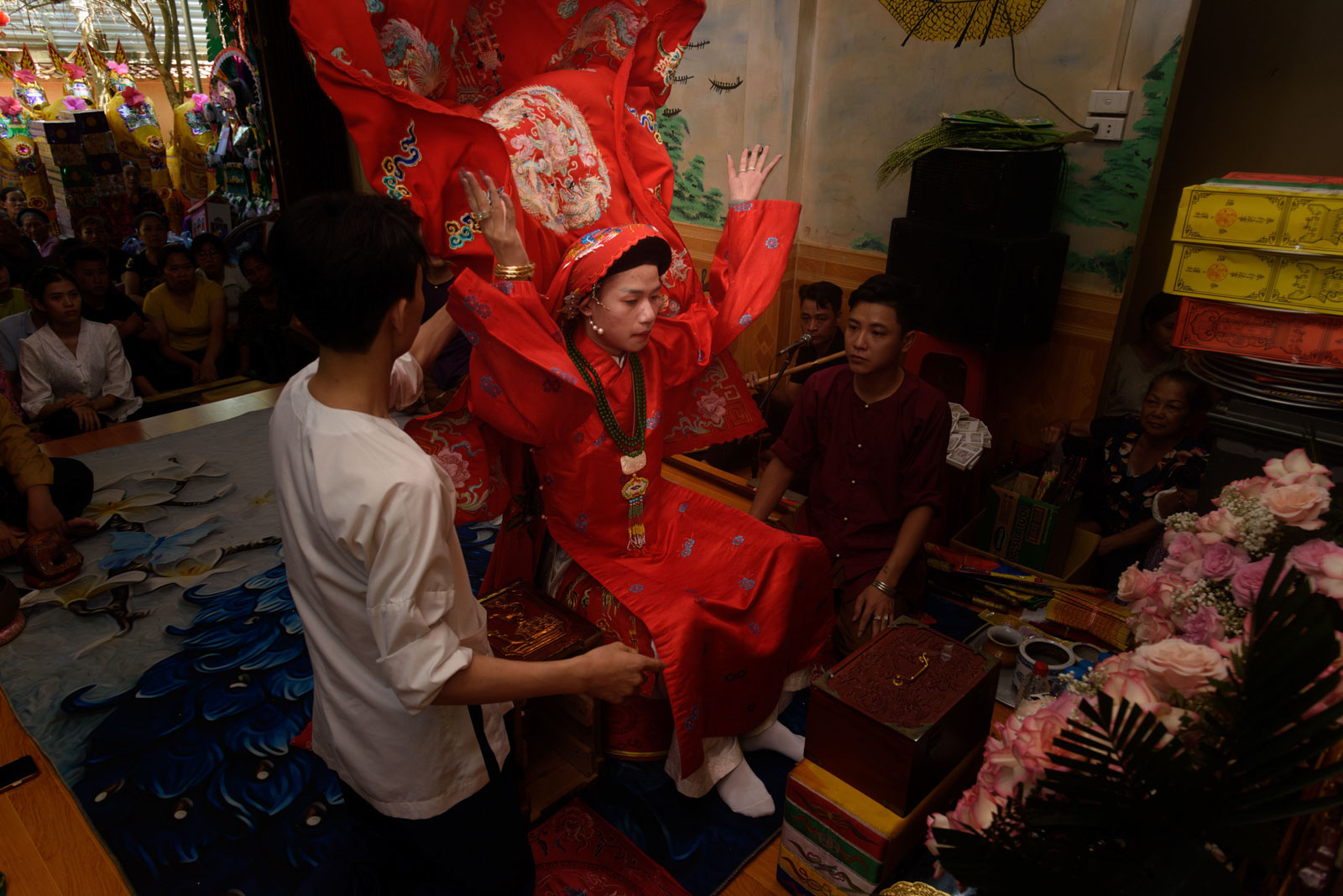
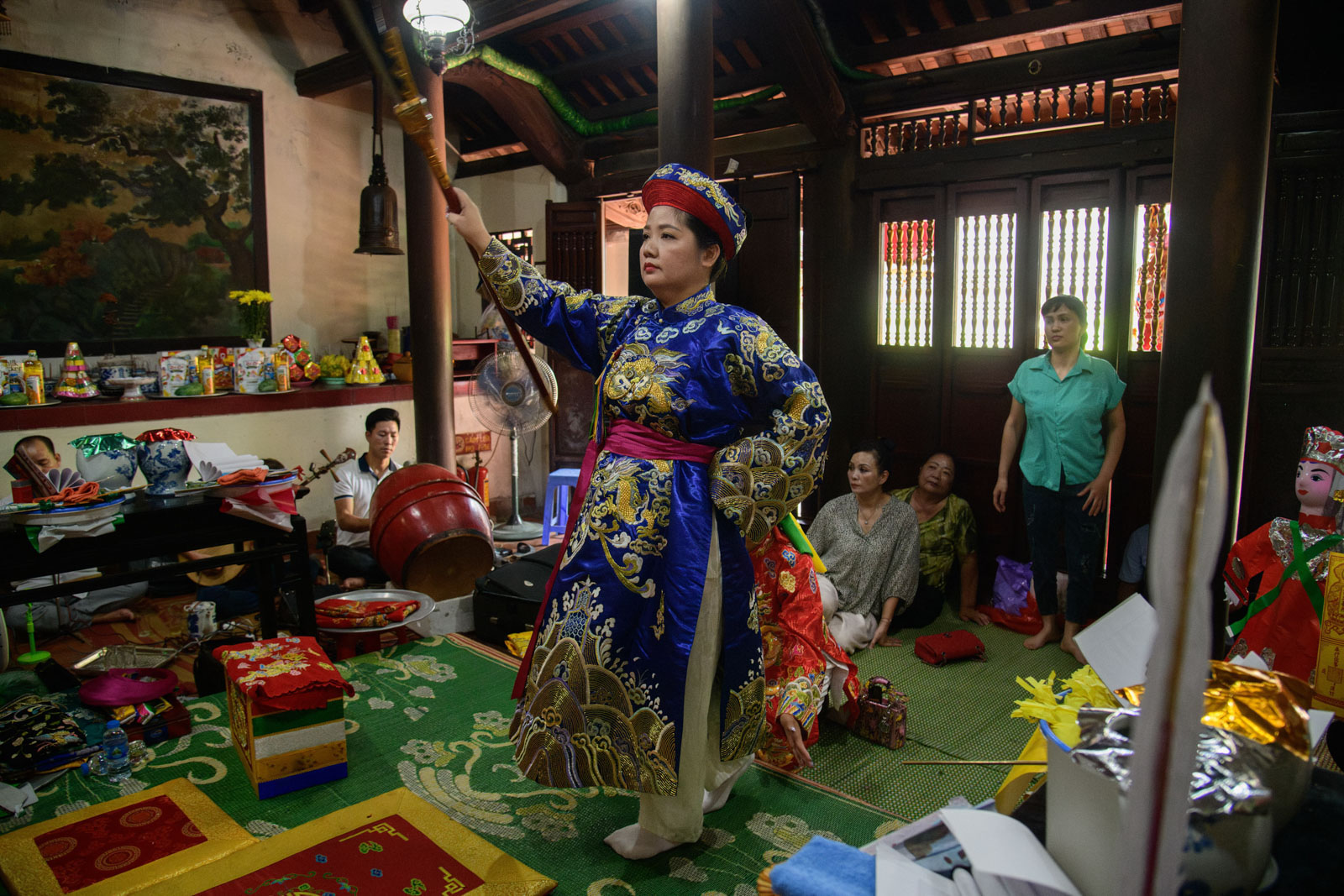
The Đạo Mẫu is distinguished by its deep tolerance and openness to non-conforming gender identities. Within this tradition there are queer mediums — generally men, but not only — who take on female roles during possession rituals, as well as deities who embody fluid or ambiguous gender traits. These mediums, called thanh đồng, enter a state of trance to welcome divine spirits, wearing women’s clothes and adopting gestures and behaviors traditionally associated with women. In this way, they symbolically overcome rigid binary gender distinctions, transforming the ritual into a celebration of the plurality of being.
In addition to the spiritual dimension, the role of the thanh đồng has a strong social value. Queer mediums enjoy respect and recognition in the community, as their ability to harbor spirits makes them spokespersons for the divine and custodians of wisdom and protection. Rituals, despite being intimate and sacred experiences, become collective moments of inclusion and celebration, in which non-binary identities find a space of legitimacy and visibility, challenging rigid social norms and creating a more open and welcoming community fabric.
The deities of the pantheon of the Đạo Mẫu often exhibit androgynous or ambivalent characteristics, revealing the complex and plural nature of both the spiritual and human spheres. Among them, Mẫu Thượng Ngàn, the Mother of the Forests, embodies the wild and untamed force of nature, manifesting itself in multiple forms and aspects. Mẫu Liễu Hạnh, one of the most revered Mothers, is instead depicted as a woman capable of transcending the conventional boundaries of gender and sexuality, becoming a symbol of freedom, metamorphosis and deified feminine power.
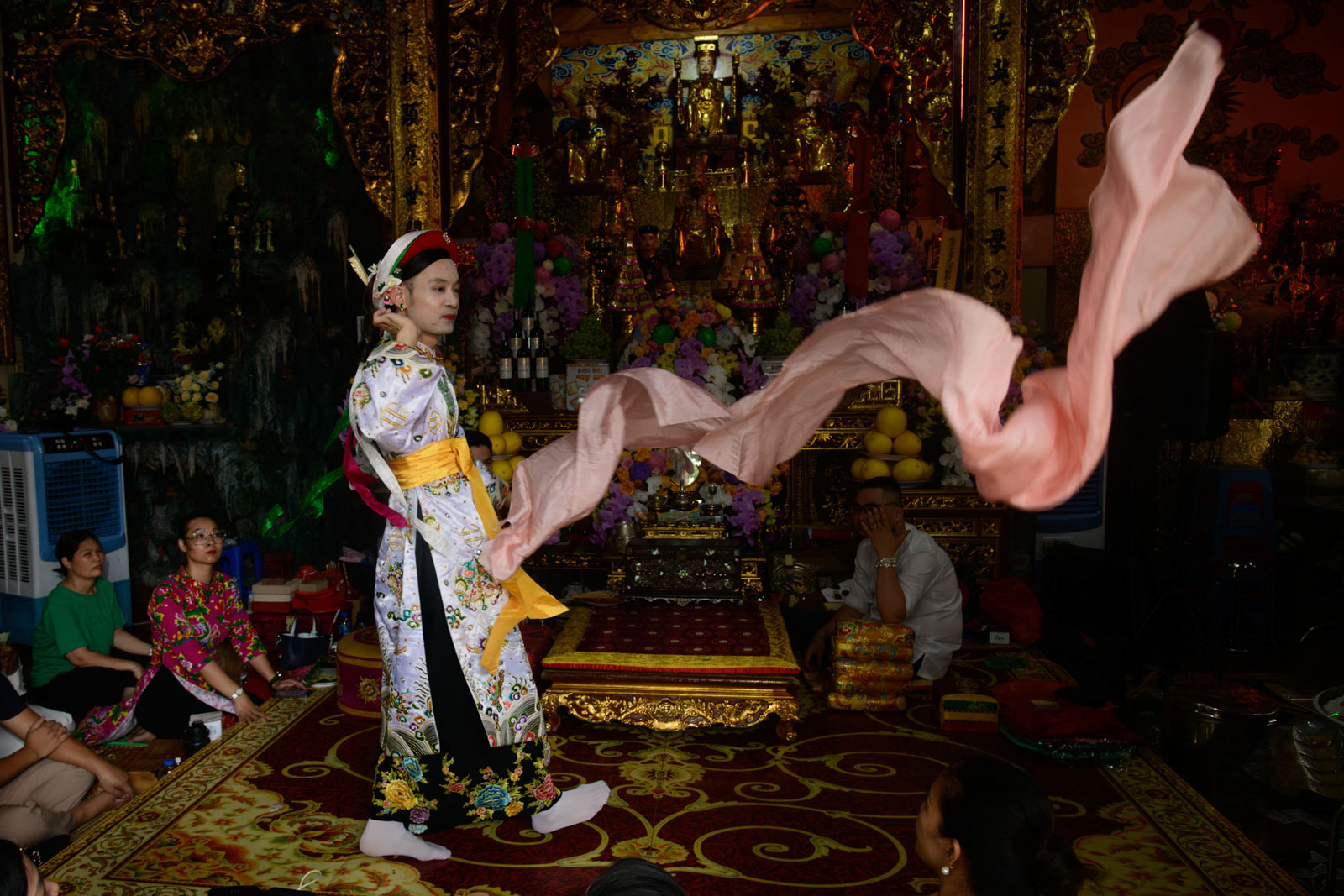
At the heart of the Đạo Mẫu is the rite of lên đồng — “ascending to the throne” — during which mediums are possessed by divine spirits, becoming a bridge between the earthly and spiritual worlds. In this sacred experience, gender fluidity is an essential part: mediums simultaneously embody multiple identities, expressed through costumes, dances and gestures that transcend any definition. The ritual thus becomes a space of freedom, where the body becomes a vehicle of the divine and the performance challenges social conventions on gender and sexuality, transforming them into an act of acceptance and celebration of the plural identity of the human being.
With its inclusiveness and extraordinary ritual richness, the Đạo Mẫu bears witness to the ancient and vital presence of gender fluidity within a traditional religious context — in stark contrast to the rigid and polarized identities of more Westernized and modern societies. This cult offers a precious key to understanding how, in different cultures, the spiritual dimension has been able to welcome and enhance non-binary identities, recognizing in the plurality of gender a manifestation of the divine itself.
Đạo Mẫu: La Religione della Madre Divina
Così come accade in molte altre culture tradizionali, anche in Vietnam il Đạo Mẫu — la Religione della Madre Divina — rappresenta un esempio emblematico di come la spiritualità possa accogliere e celebrare la fluidità di genere e la diversità sessuale. Diffuso soprattutto nel Nord del Paese, questo culto popolare si fonda sulla venerazione delle Madri Divine, dee che incarnano le forze della natura, la fertilità, la protezione e la guarigione.
Il Đạo Mẫu si distingue per la sua profonda tolleranza e per l’apertura verso identità di genere non conformi. All’interno di questa tradizione operano medium queer — generalmente uomini, ma non solo — che durante i rituali di possessione assumono ruoli femminili, così come divinità che incarnano tratti di genere fluidi o ambigui. Questi medium, chiamati thanh đồng, entrano in uno stato di trance per accogliere gli spiriti divini, indossando abiti femminili e adottando gesti e comportamenti tradizionalmente associati alle donne. In questo modo, superano simbolicamente le rigide distinzioni binarie di genere, trasformando il rito in una celebrazione della pluralità dell’essere.
Oltre alla dimensione spirituale, il ruolo dei thanh đồng ha un forte valore sociale. I medium queer godono di rispetto e riconoscimento nella comunità, poiché la loro capacità di ospitare gli spiriti li rende portavoce del divino e custodi di saggezza e protezione. I rituali, pur essendo esperienze intime e sacre, diventano momenti collettivi di inclusione e celebrazione, in cui le identità non binarie trovano uno spazio di legittimità e visibilità, sfidando le norme sociali rigide e creando un tessuto comunitario più aperto e accogliente.
Le divinità del pantheon del Đạo Mẫu presentano spesso caratteristiche androgine o ambivalenti, rivelando la natura complessa e plurale tanto della sfera spirituale quanto di quella umana. Tra esse, Mẫu Thượng Ngàn, la Madre delle Foreste, incarna la forza selvaggia e indomita della natura, manifestandosi in molteplici forme e aspetti. Mẫu Liễu Hạnh, una delle Madri più venerate, è invece raffigurata come una donna capace di trascendere i confini convenzionali di genere e sessualità, divenendo simbolo di libertà, metamorfosi e potere femminile divinizzato.
Al cuore del Đạo Mẫu vi è il rito del lên đồng — “ascendere al trono” — durante il quale i medium vengono posseduti dagli spiriti divini, divenendo ponte tra il mondo terreno e quello spirituale. In questa esperienza sacra, la fluidità di genere è parte essenziale: i medium incarnano simultaneamente molteplici identità, espresse attraverso costumi, danze e gestualità che travalicano ogni definizione. Il rituale diventa così uno spazio di libertà, dove il corpo si fa veicolo del divino e la performance sfida le convenzioni sociali su genere e sessualità, trasformandole in un atto di accettazione e celebrazione dell’identità plurale dell’essere umano.
Con la sua inclusività e la sua straordinaria ricchezza rituale, il Đạo Mẫu testimonia la presenza antica e vitale della fluidità di genere all’interno di un contesto religioso tradizionale — in netto contrasto con le identità rigide e polarizzate delle società più occidentalizzate e moderne. Questo culto offre una chiave preziosa per comprendere come, in diverse culture, la dimensione spirituale abbia saputo accogliere e valorizzare le identità non binarie, riconoscendo nella pluralità del genere una manifestazione del divino stesso.