Rosario Lo Presti-Ny Lalako
Ny lalako
(Street in the north of Madagascar)
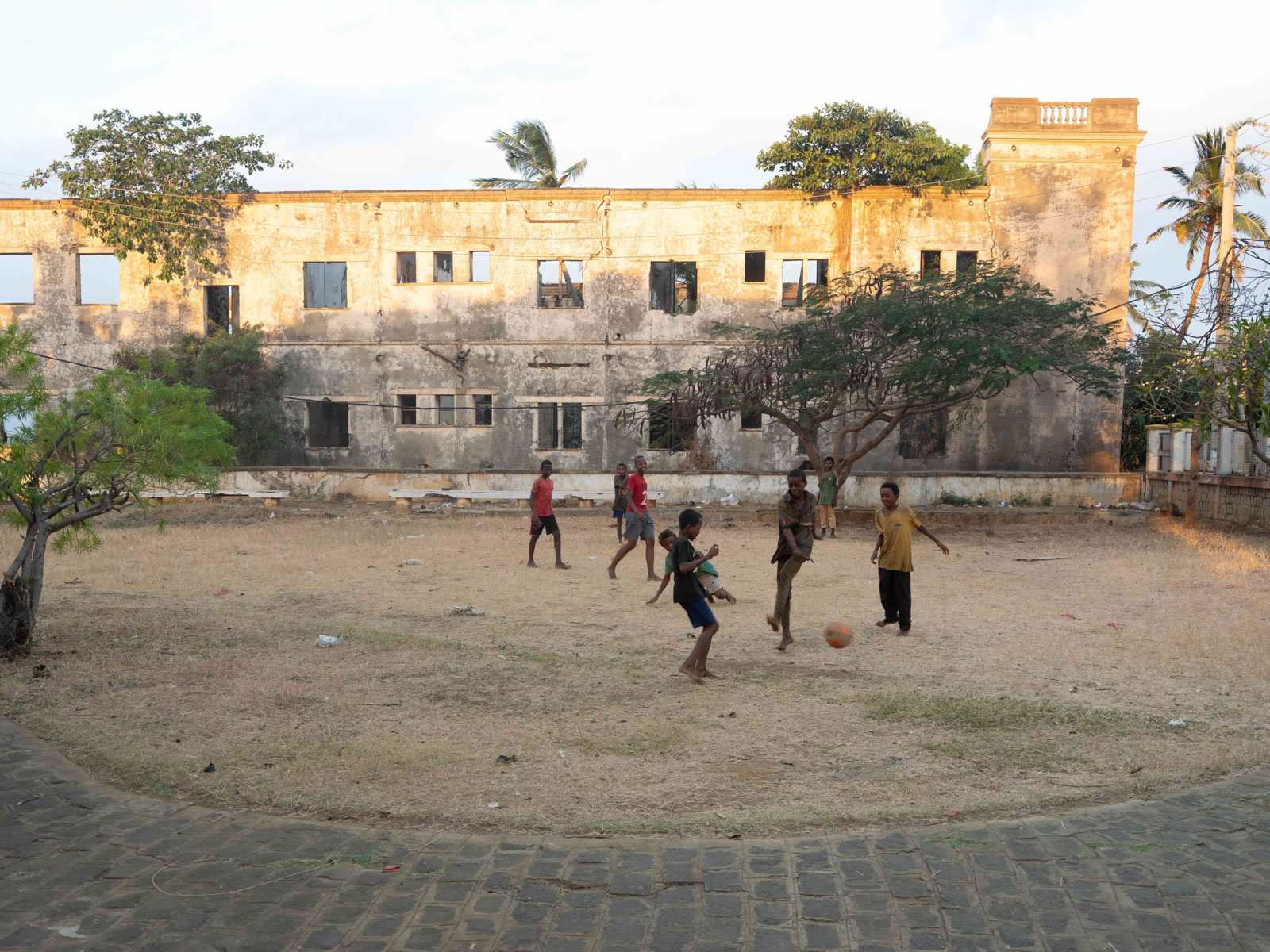
In Madagascar, the street is not just a place of passage, but a living theater. People meet, wait, sell, play, look at each other and let themselves be looked at. Everything happens outdoors: the sacred and the ordinary, noise and silence, fullness and emptiness.
This project is my way of crossing – visually – Diego Suarez and Nosy Be. Two distinct places, united by a shared identity: lived-in walls, children everywhere, flags waving over dusty markets, animals that are part of the landscape. And then the tuk-tuks, ubiquitous: means of transport, shelters, mobile glimpses of reality. In three images I followed them, observed them, let them enter the story as living symbols of the Malagasy road. I chose to move without expectations, with a slow gaze, looking not for the extraordinary, but for the sense of normal things. My street photography does not chase aesthetic effect or easy exoticism. Observe and walk. He lets himself be touched. I photographed twins eating in silence, children running, people standing still. I left room for surprise and anticipation. And I sought, everywhere, a balance between presence and absence.
The last photo shows a dog walking in the water, at sunset. A scene apparently distant from urban language. But for me it is the most authentic point of arrival. That thin line between land and sea is still a road. The dog, with its quiet solitude, is perhaps the perfect passer-by: it crosses the world without making noise, without knowing that it is being watched. That too, after all, is “ny lalako”: my path.
ITALIANO
Ny lalako
(La mia street – Street nel nord del Madagascar)
In Madagascar la strada non è solo un luogo di passaggio, ma un teatro vivente. Le persone si incontrano, aspettano, vendono, giocano, si guardano e si lasciano guardare. Tutto avviene all’aperto: il sacro e l’ordinario, il rumore e il silenzio, il pieno e il vuoto.
Questo progetto è il mio modo di attraversare – visivamente – Diego Suarez e Nosy Be. Due luoghi distinti, uniti da un’identità condivisa: muri vissuti, bambini ovunque, bandiere che ondeggiano sopra mercati polverosi, animali che fanno parte del paesaggio.
E poi i tuk-tuk, onnipresenti: mezzi di trasporto, rifugi, scorci mobili di realtà. In tre immagini li ho seguiti, osservati, lasciati entrare nel racconto come simboli viventi della strada malgascia.
Ho scelto di muovermi senza aspettative, con uno sguardo lento, cercando non lo straordinario, ma il senso delle cose normali.
La mia street photography non rincorre l’estetica ad effetto né l’esotismo facile. Osserva e cammina. Si lascia toccare. Ho fotografato gemelle che mangiano in silenzio, bambini che corrono, persone che stanno ferme. Ho lasciato spazio alla sorpresa e all’attesa. E ho cercato, ovunque, un equilibrio tra presenza e assenza.
L’ultima foto mostra un cane che cammina nell’acqua, al tramonto. Una scena apparentemente distante dal linguaggio urbano. Ma per me è il punto d’arrivo più autentico. Quella linea sottile tra terra e mare è ancora una strada. Il cane, con la sua solitudine tranquilla, è forse il passante perfetto: attraversa il mondo senza fare rumore, senza sapere di essere guardato.
Anche quella, in fondo, è “ny lalako”: la mia strada.