Claudio Varaldi – Tihar Festival
There is a moment, in Kathmandu, when the night stops being dark. It happens every year, in autumn, when thousands of oil lamps are lit threshold after threshold, window
after window, until the entire valley seems to breathe light. The stupa you know from postcards, surrounded by orange marigold flowers, suddenly becomes something different: not a monument, but a starting point.
I arrived during the Tihar without fully knowing what awaited me. I was thinking of a party. I found something older and more alive: a continuous dialogue between the world of the living and that of the dead, between human beings and the other forms of life with which we share this planet.
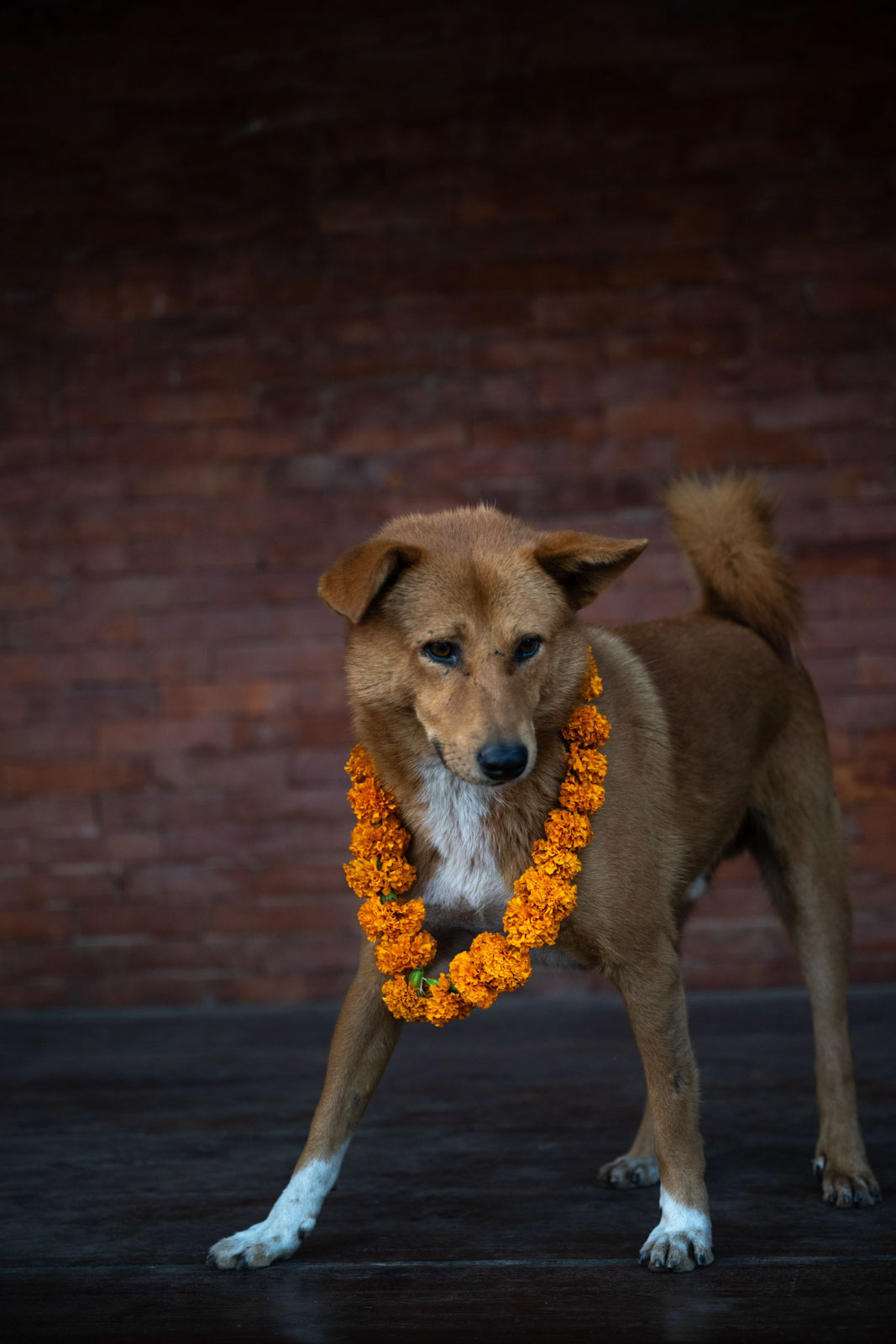
On the first day, the ravens are fed as messengers of Yama, the God of Death. The second belongs to the dogs – blessed with the red tika on their foreheads and crowned with garlands of flowers, honored with a seriousness that disarms. I looked into the eyes of one of them for a long time: he didn’t seem surprised to be celebrated. On the third day, the Goddess Laxmi descends among the illuminated houses, guided by the rangoli – mandalas of petals and colored powders traced on the thresholds since dawn, red, yellow, magenta. On the fourth the oxen are celebrated. On the fifth, the Bhai Tika, the sisters bless their brothers with a slow gesture that has the weight of a thousand-year-old ritual.
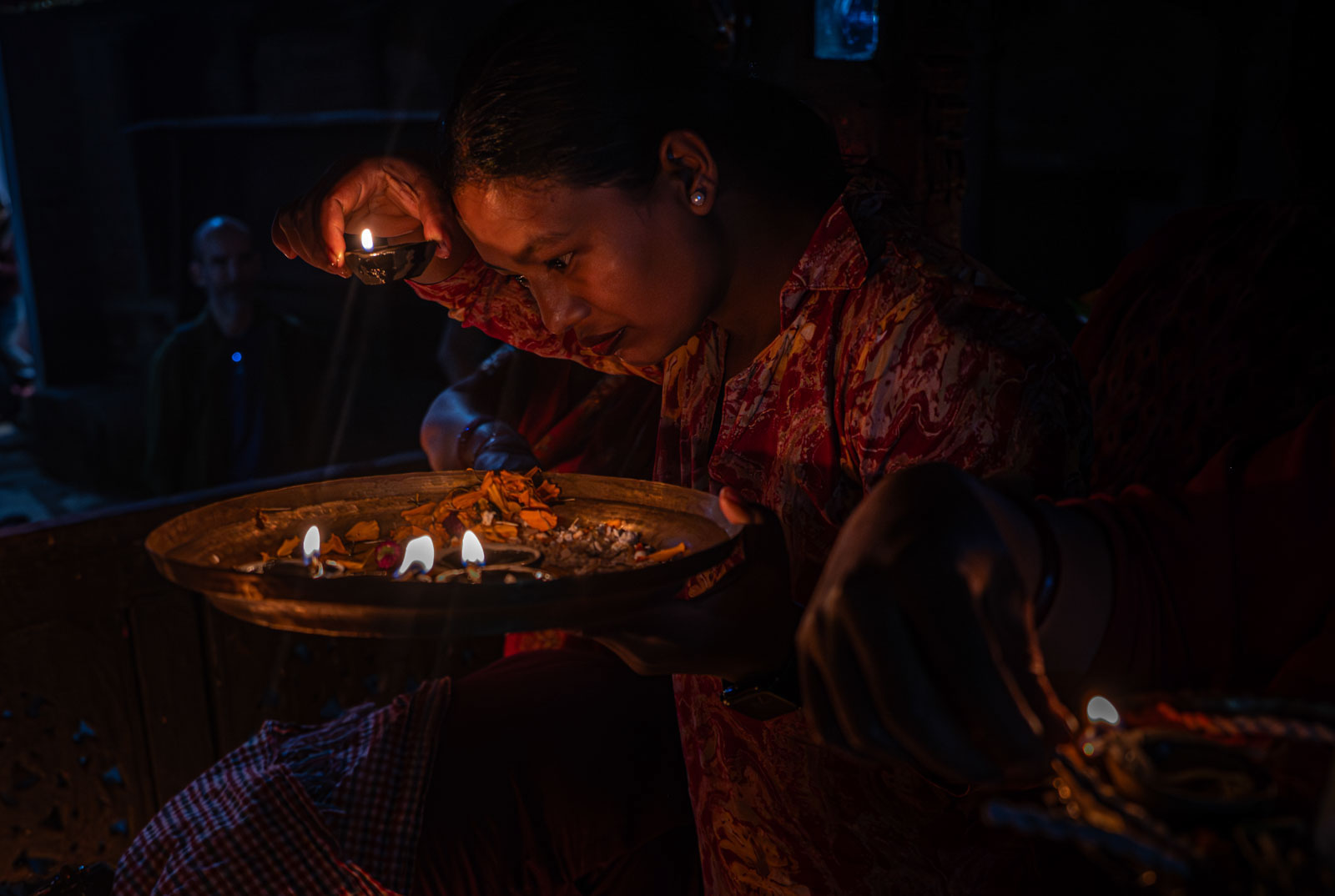
I photographed not as a documentary filmmaker, but as a guest. I let the fèsta pass through me – the acrid scent of the marigolds, the warmth of the oil lamps, the laughter of the little boys singing the Deusi and the Bhailo from door to door, the face of an old woman lighting her star in the darkness with the concentration of someone who is doing something necessary.
Nepal in 2082 – as their calendar says – is not a distant country. It is a country that still knows what it means to stop and celebrate life, all life, in all its forms. And that he does it with a joy that has nothing naïve about it
Festival di Tihar
C’è un momento, a Kathmandu, in cui la notte smette di essere buia. Succede ogni anno, in autunno, quando migliaia di lampade a olio vengono accese soglia dopo soglia, finestra
dopo finestra, fino a che l’intera valle sembra respirare luce. ello stupa che conosci dalle cartoline, circondato di fiori di calendula arancione, diventa d’improvviso qualcosa di diverso: non un monumento, ma un punto di partenza.
Sono arrivato durante il Tihar senza sapere fino in fondo cosa mi aspettasse. Pensavo a una festa. Ho trovato qualcosa di piu antico e di piu vivo: un dialogo continuo tra il mondo dei vivi e quello dei morti, tra gli esseri umani e le altre forme di vita con cui condividiamo questo pianeta.
Il primo giorno i corvi vengono nutriti come messaggeri di Yama, il Dio della Morte. Il secondo appartiene ai cani – benedetti con la tika rossa sulla fronte e incoronati di ghirlande di fiori, onorati con una serieta che disarma. Ho guardato a lungo negli occhi uno di loro: non sembrava sorpreso di essere celebrato. Il terzo giorno la Dea Laxmi scende tra le case illuminate, guidata dai rangoli – mandala di petali e polveri colorate tracciati sulle soglie fin dall’alba, rossi, gialli, magenta. Il quarto si celebrano i buoi. Il quinto, il Bhai Tika, le sorelle benedicono i fratelli con un gesto lento che ha il peso di un rito millenario.
Ho fotografato non come documentarista, ma come ospite. Ho lasciato che la fèsta mi attraversasse – il profumo acre dei marigold, il calore delle lampade ad olio, le risate dei ragazzini che cantano il Deusi e il Bhailo di porta in porta, il viso di una donna anziana che accende il suo divo nell’oscurità con la concentrazione di chi sta compiendo qualcosa di necessario.
Il Nepal del 2082 – come recita il loro calendario – non e un paese lontano. È un paese che sa ancora cosa signifìca fermarsi a celebrare la vita, tutta la vita, in tutte le sue forme. E che lo fa con una gioia che non ha niente di ingenuo