Ignazio Sfragara – Busan
Busan is the second largest city in South Korea and the country’s main port. Squeezed between the mountains and the sea, it thrives on contrasts: industrial and spiritual, hectic and everyday at the same time. For many Koreans, it represents the opposite of Seoul: less formal, more direct, more linked to real life and the sea.
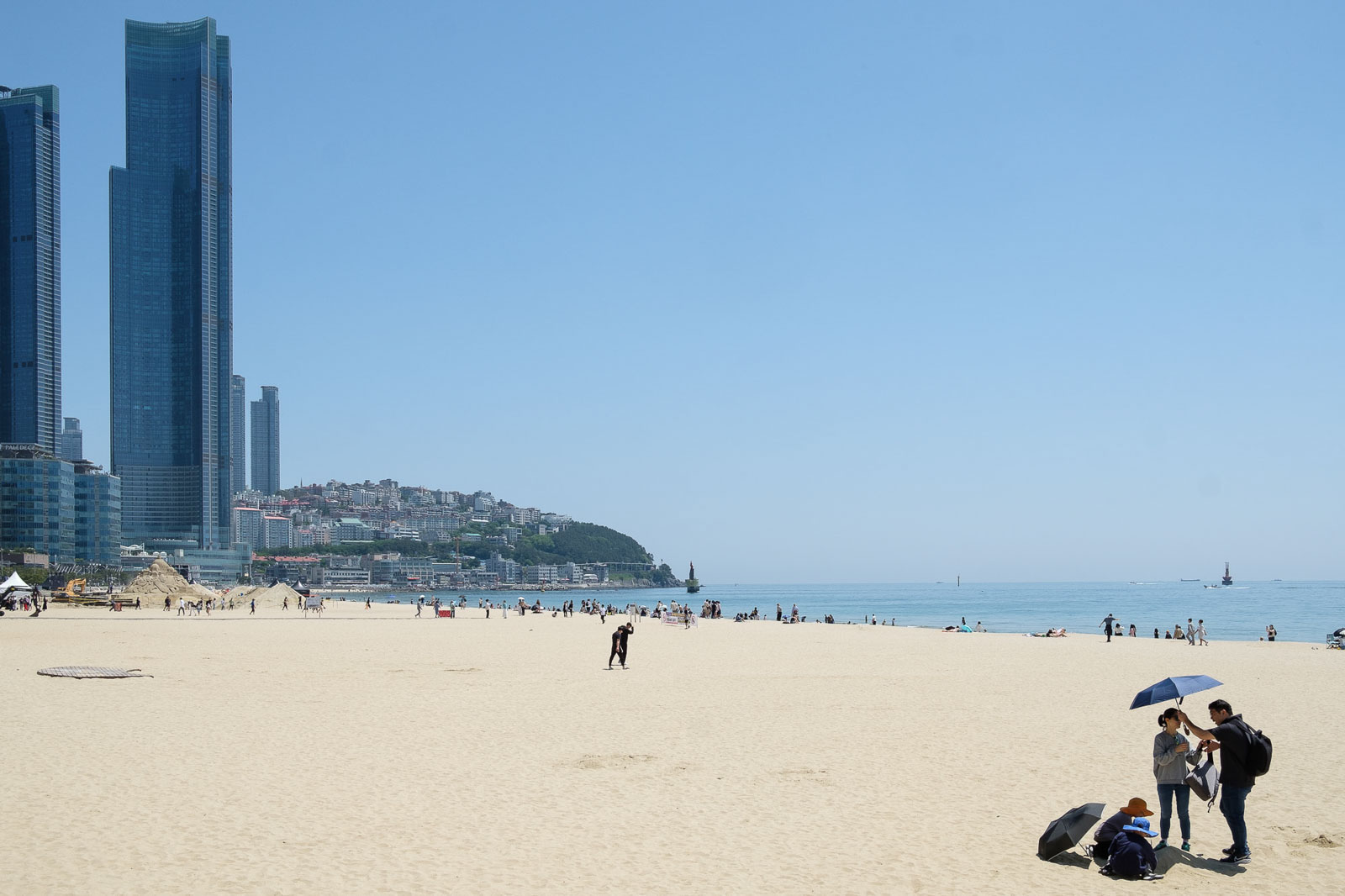
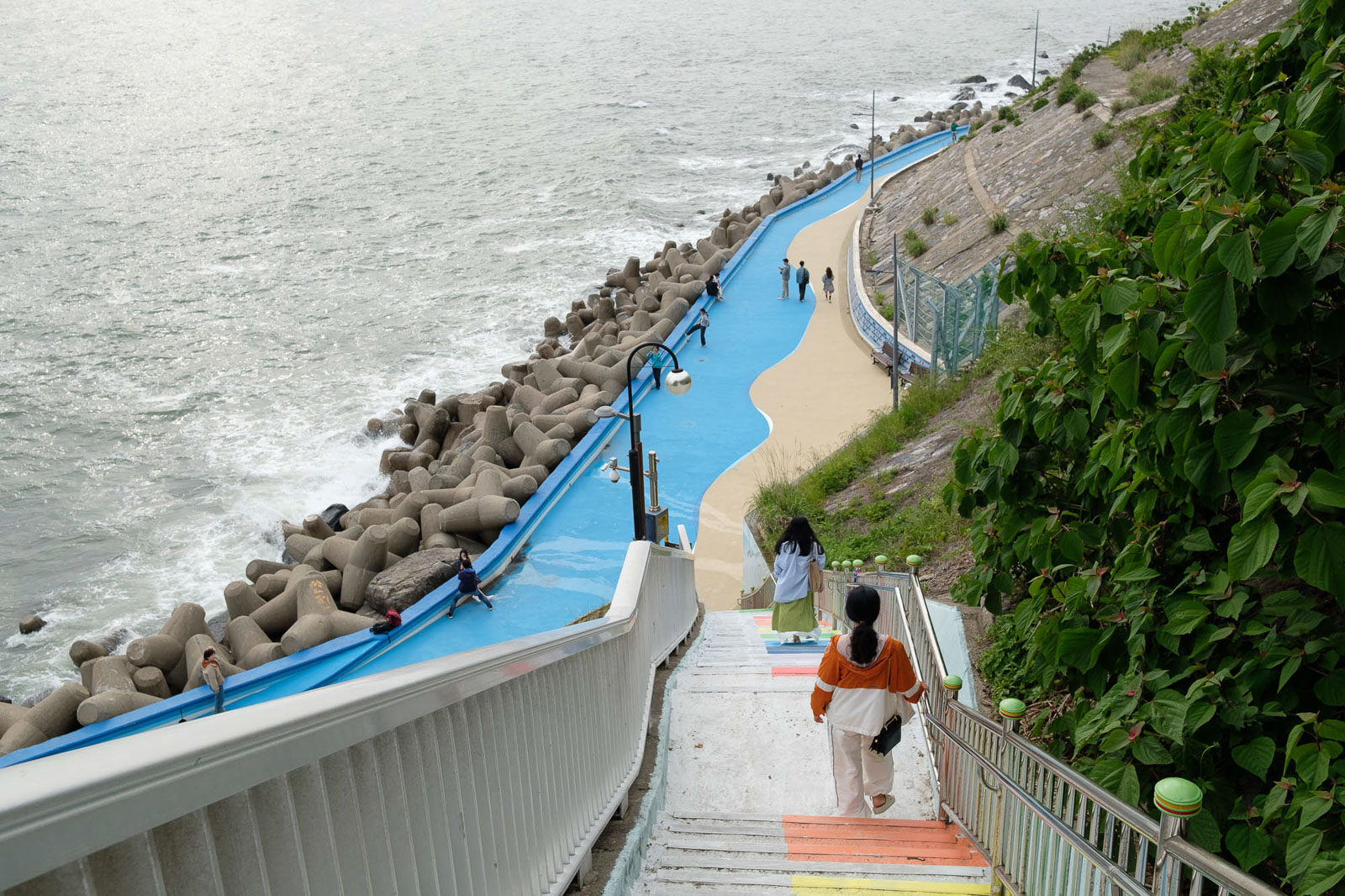
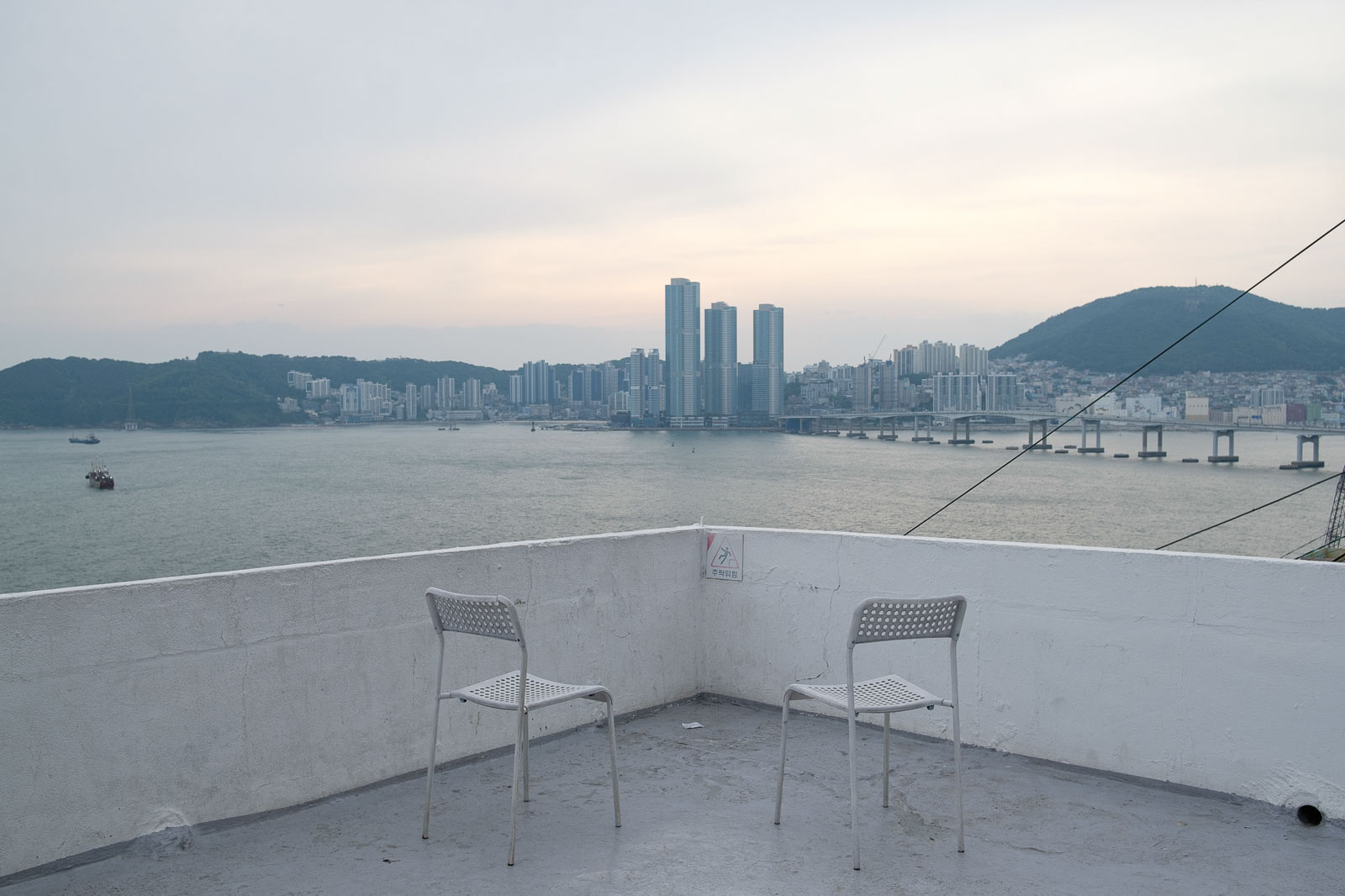
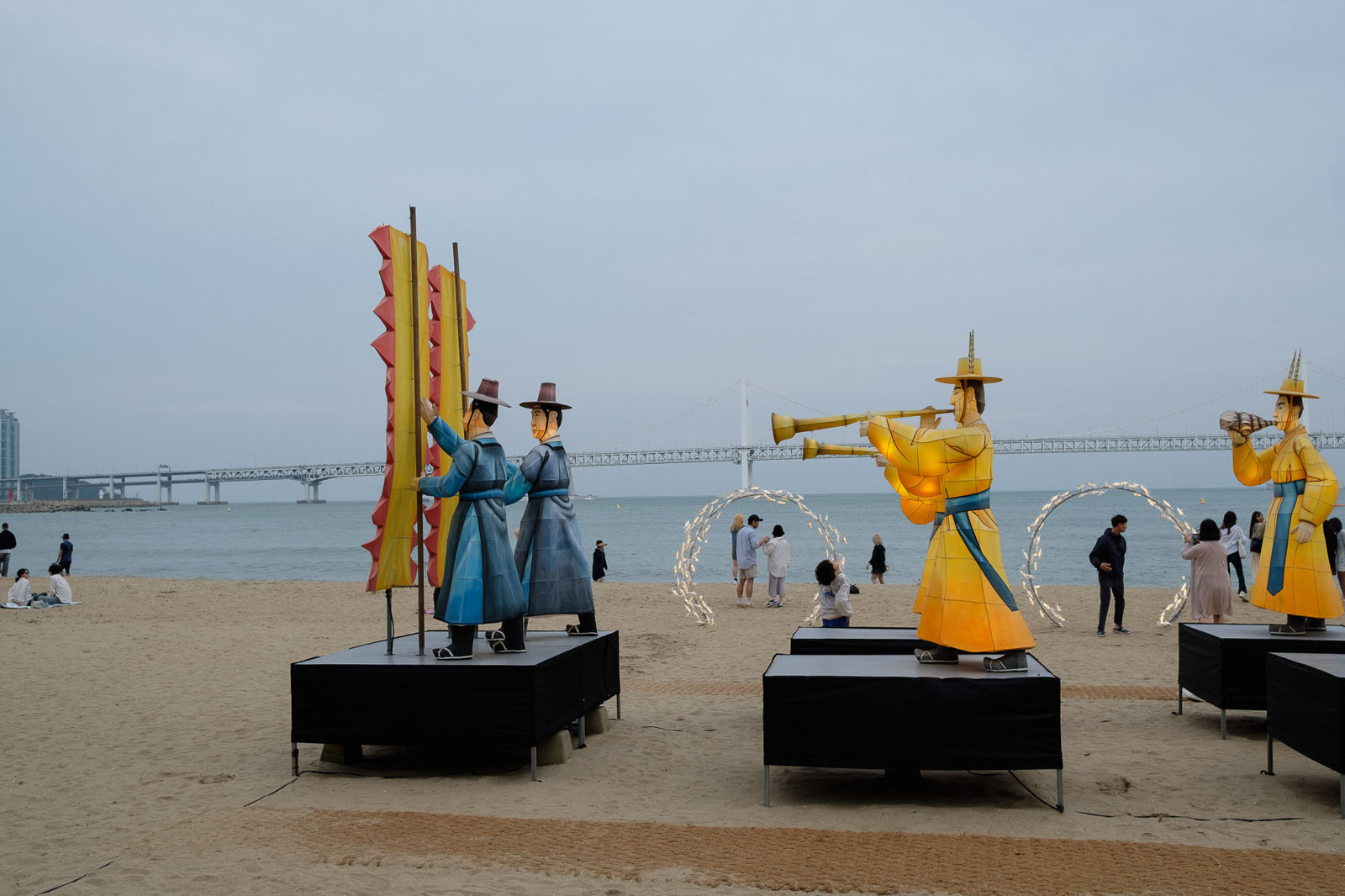
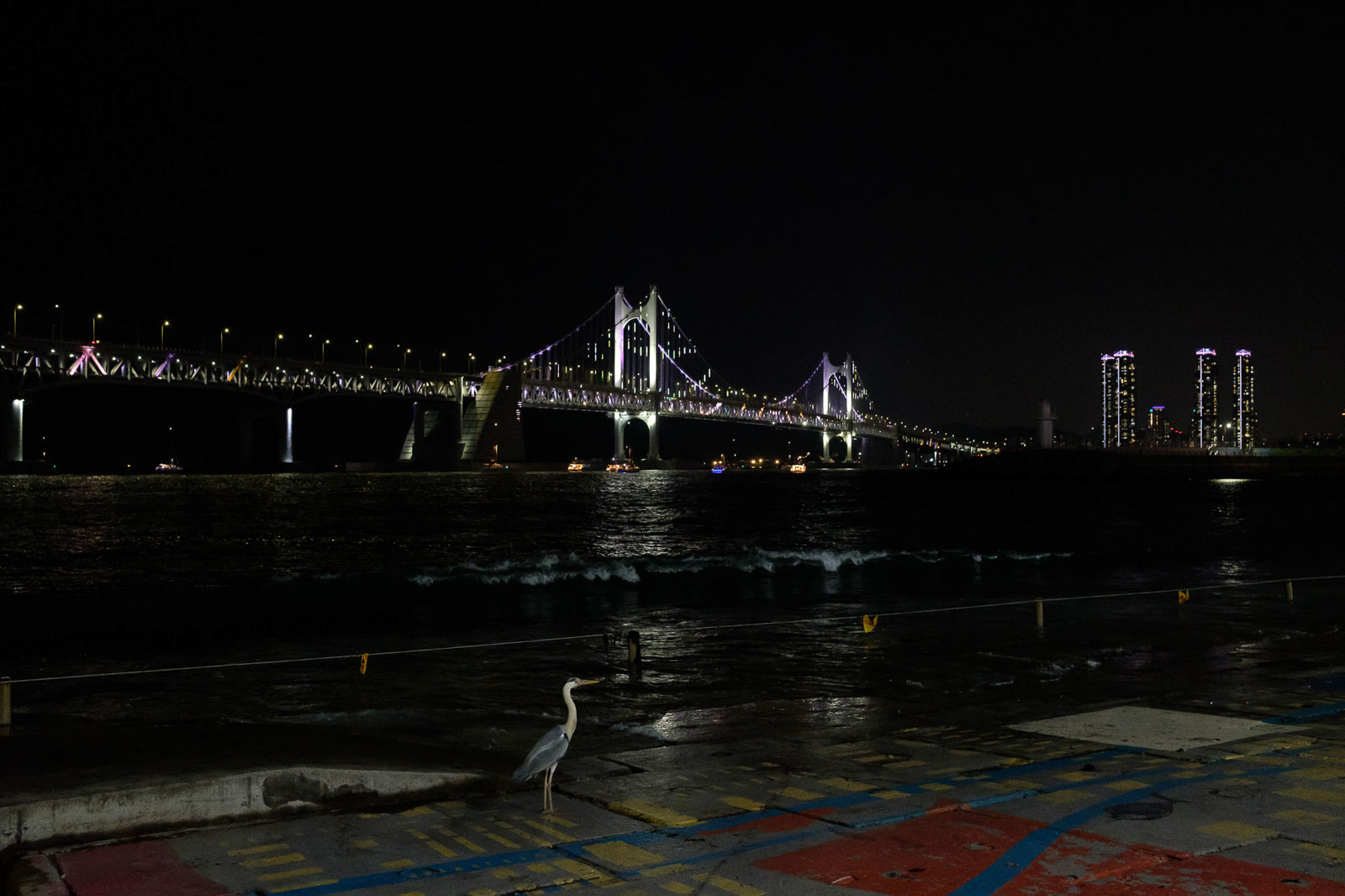
Between sea and architecture, the city seems to move slowly in a suspended space, where the human presence remains discreet and silent. Urban beaches, markets, artificial lights and coastal geometries coexist in a continuous balance between density and openness.
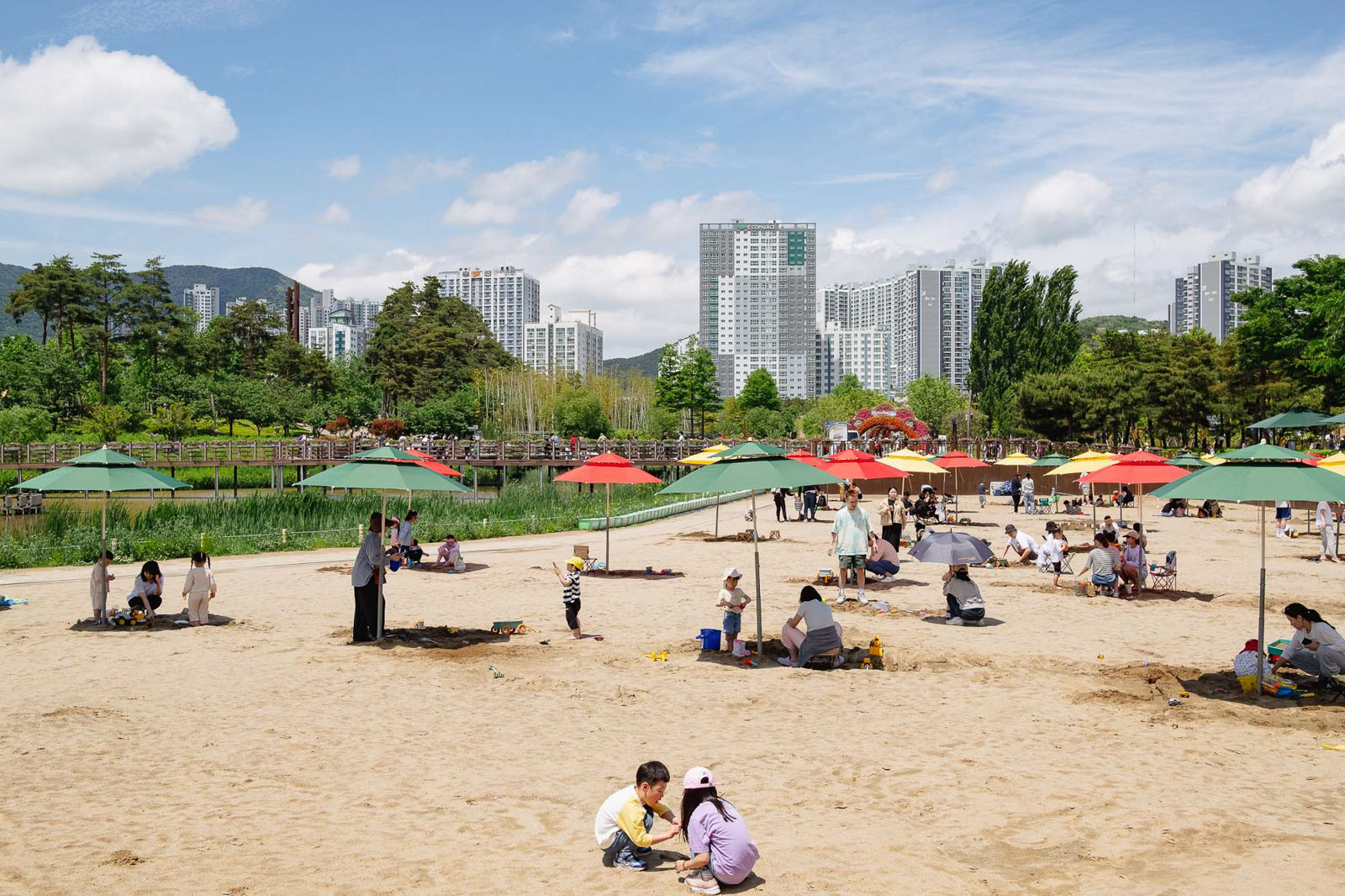
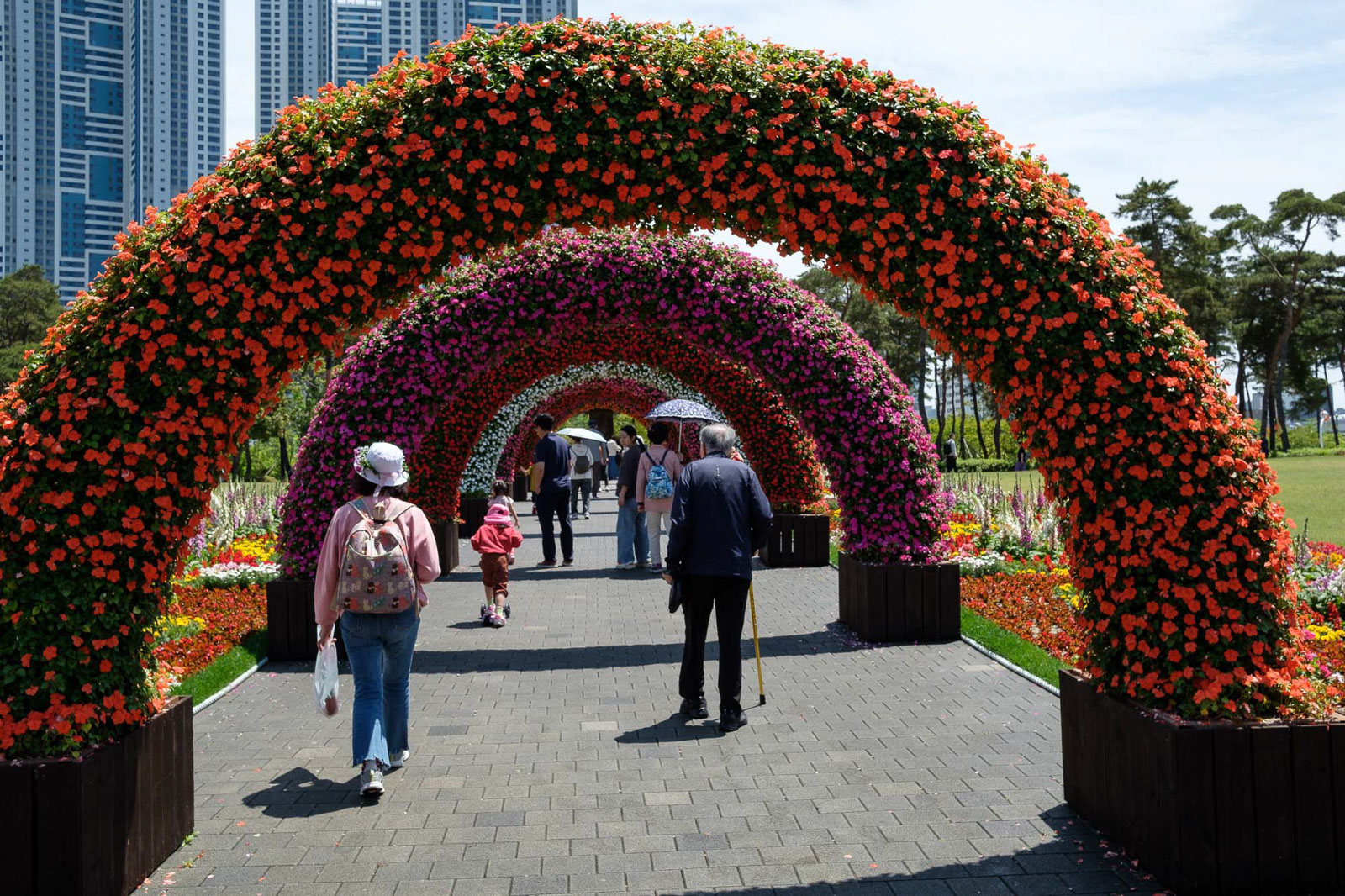
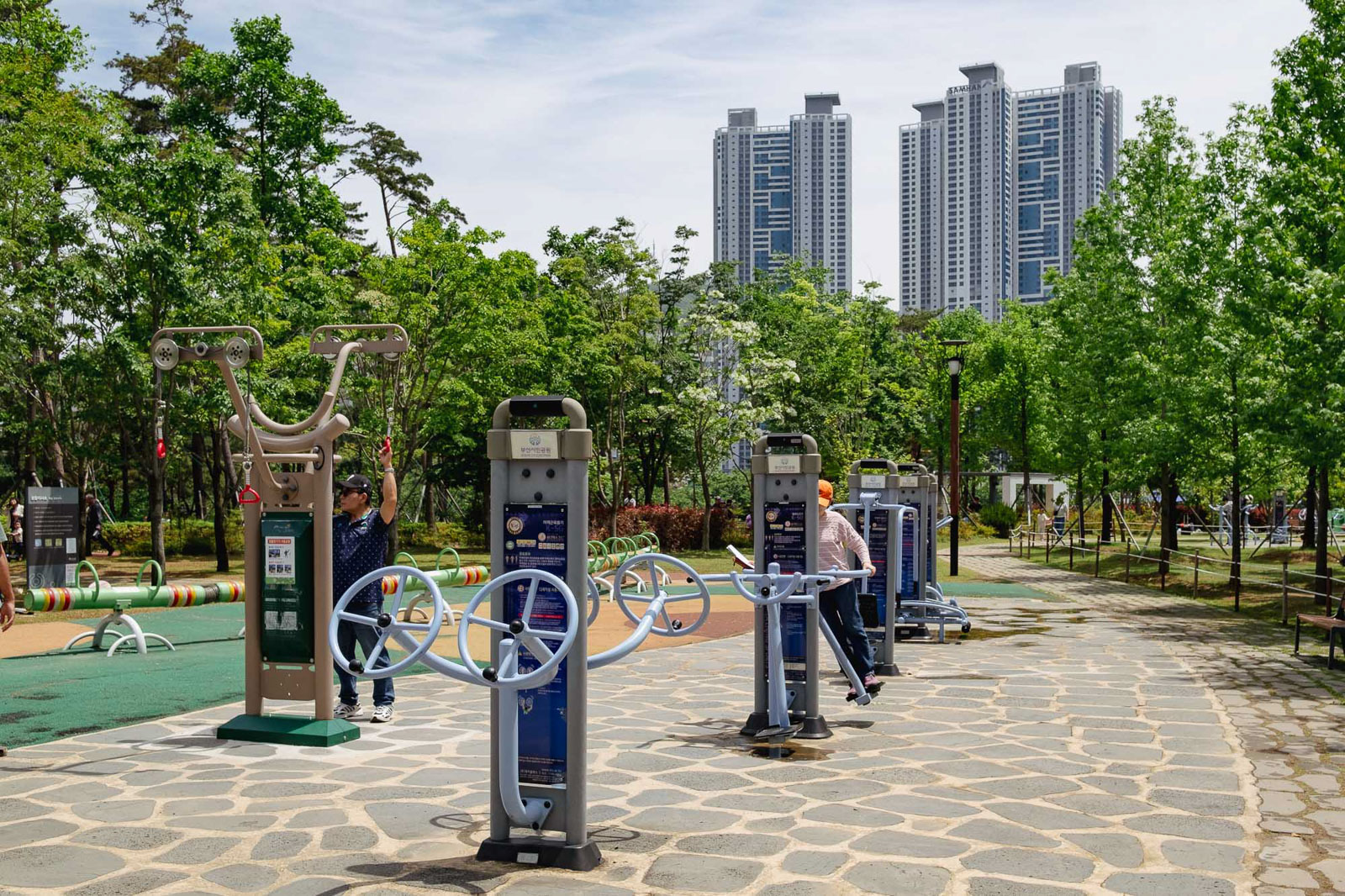
People traverse public spaces naturally, transforming the cityscape into a shared place that is more than spectacular. There remains a constant feeling of calm and everyday life, in which the sea is not a background but a concrete presence that accompanies every gesture.
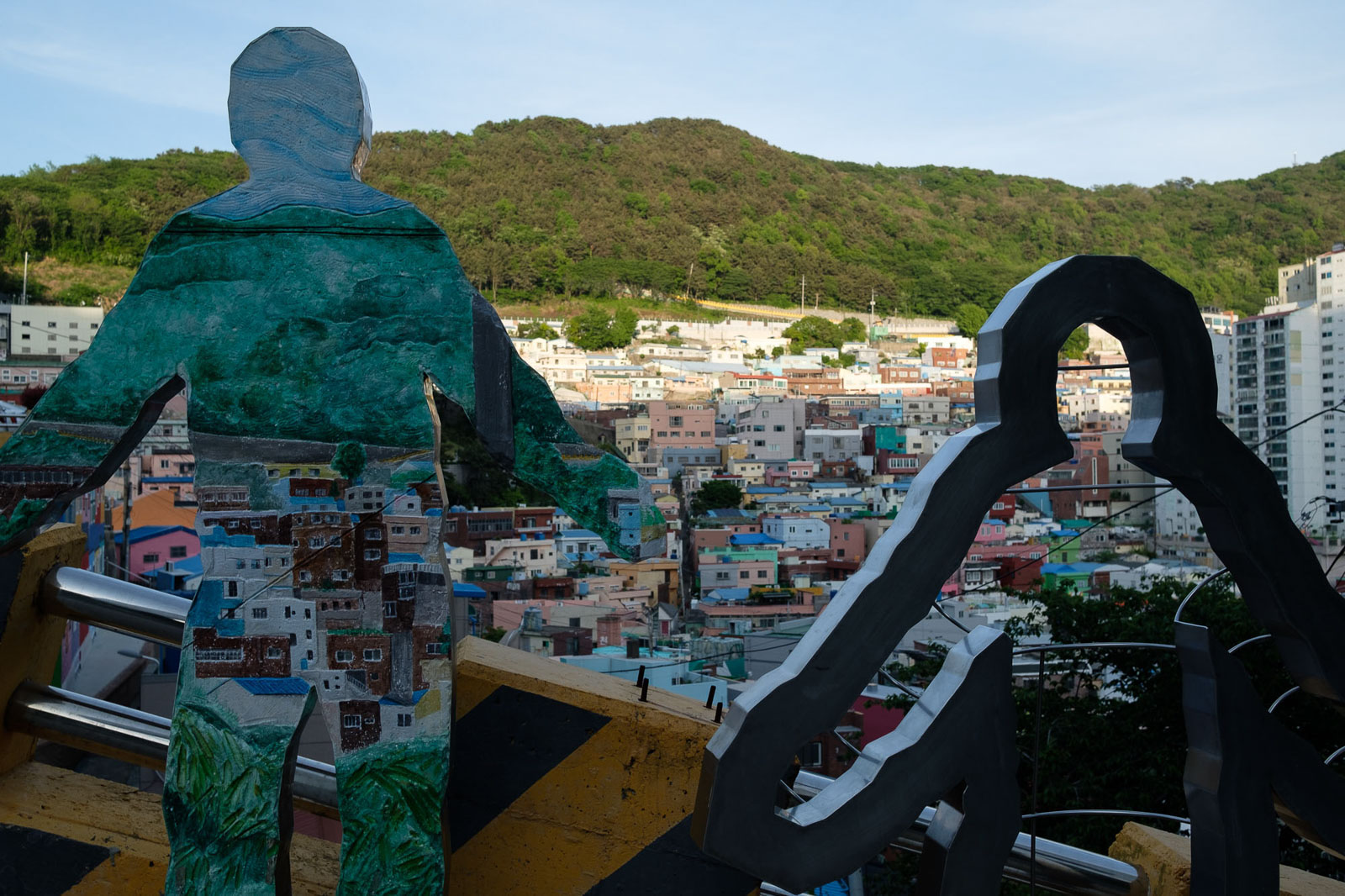
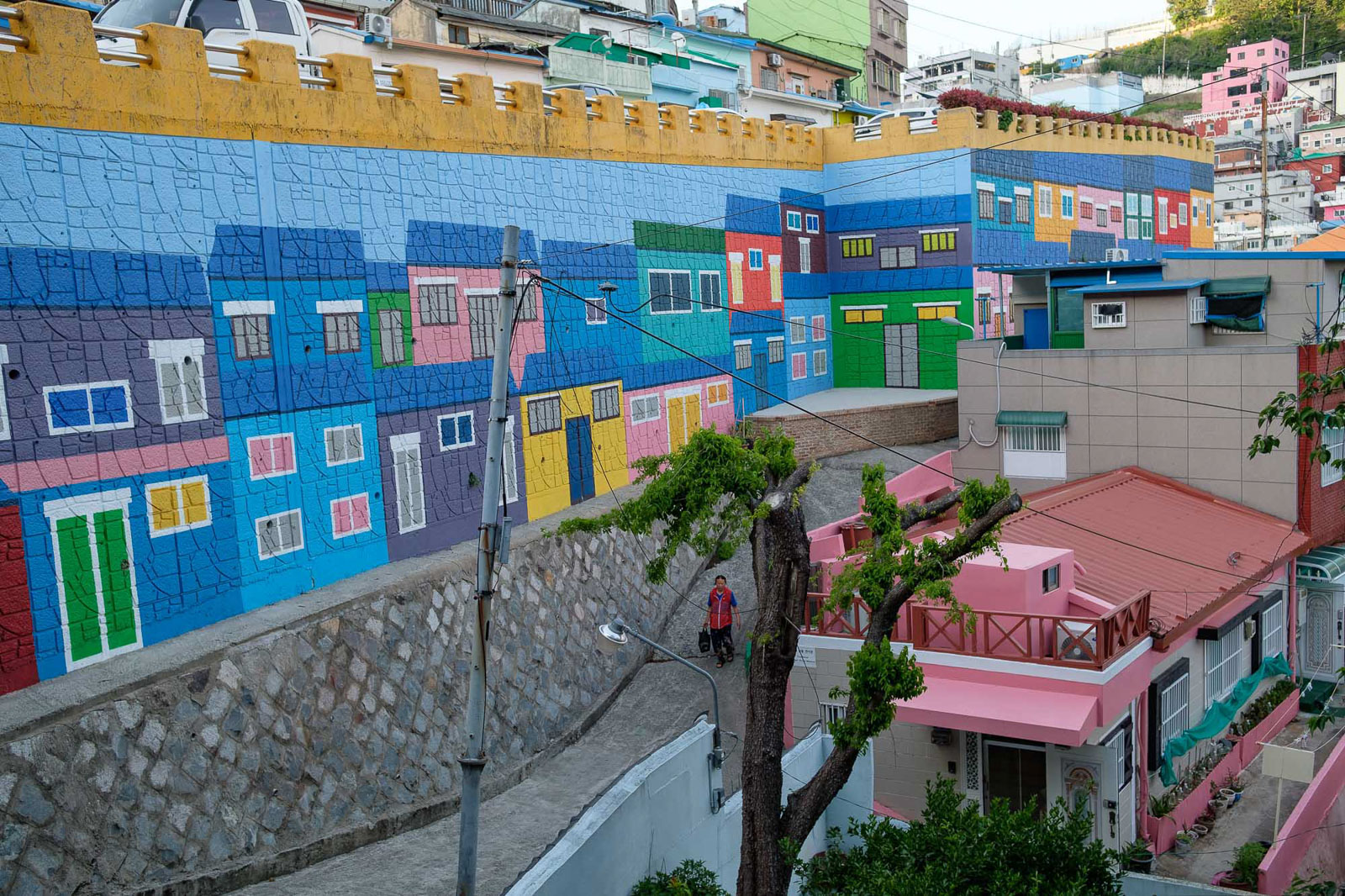
During the Korean War, Busan was the only major city not to be occupied by the North and became a refuge for thousands of refugees. This memory is still present in the colorful hilly neighborhoods, in the houses leaning against each other and in the proud identity of its inhabitants.
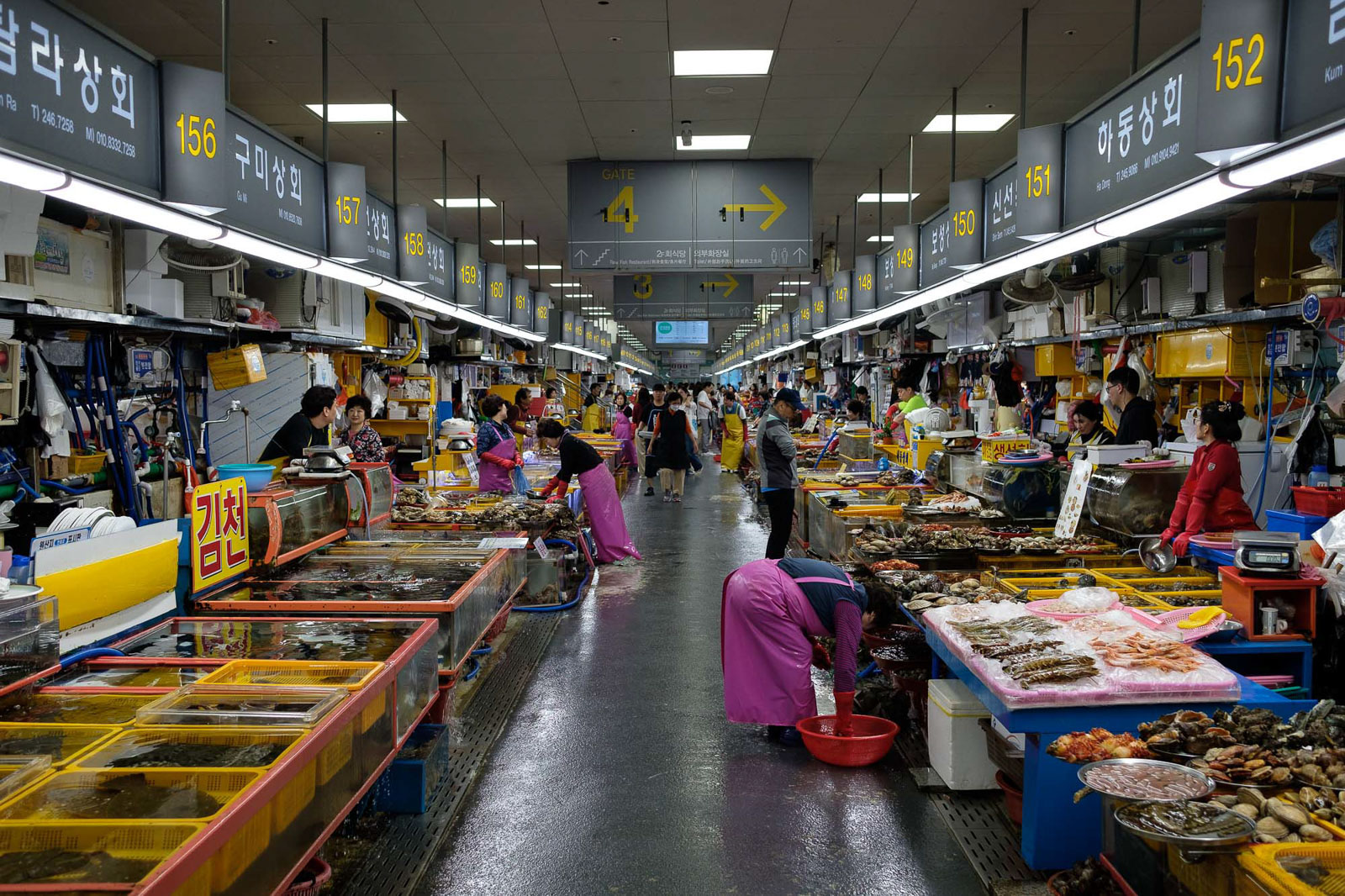
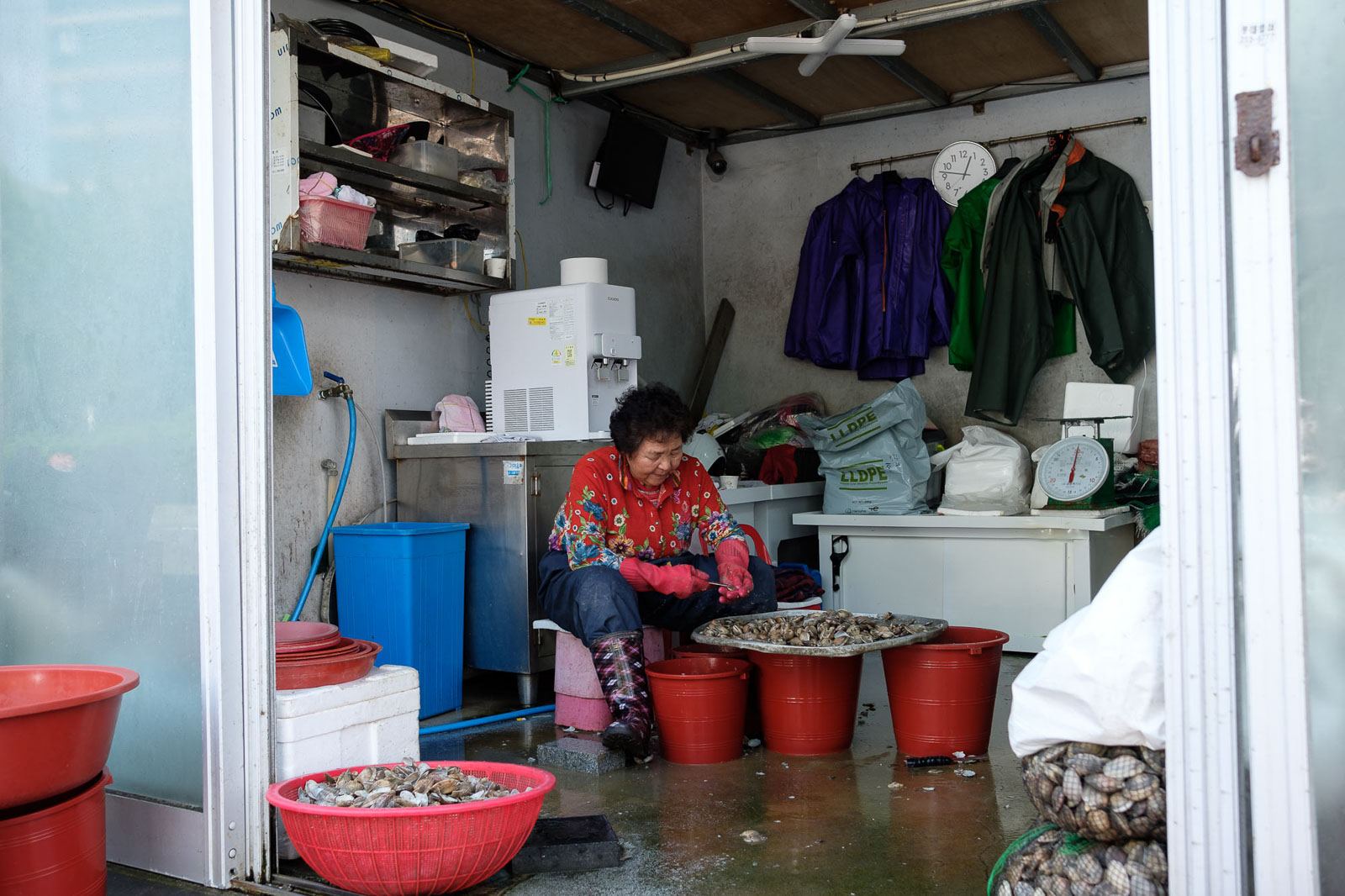
The symbol of the city is Jagalchi Fish Market, Korea’s largest fish market. Here fish is not just trade, but part of everyday culture: auctions at dawn, live tanks, the smell of salt and historic sellers who embody the strong and pragmatic character of the city.
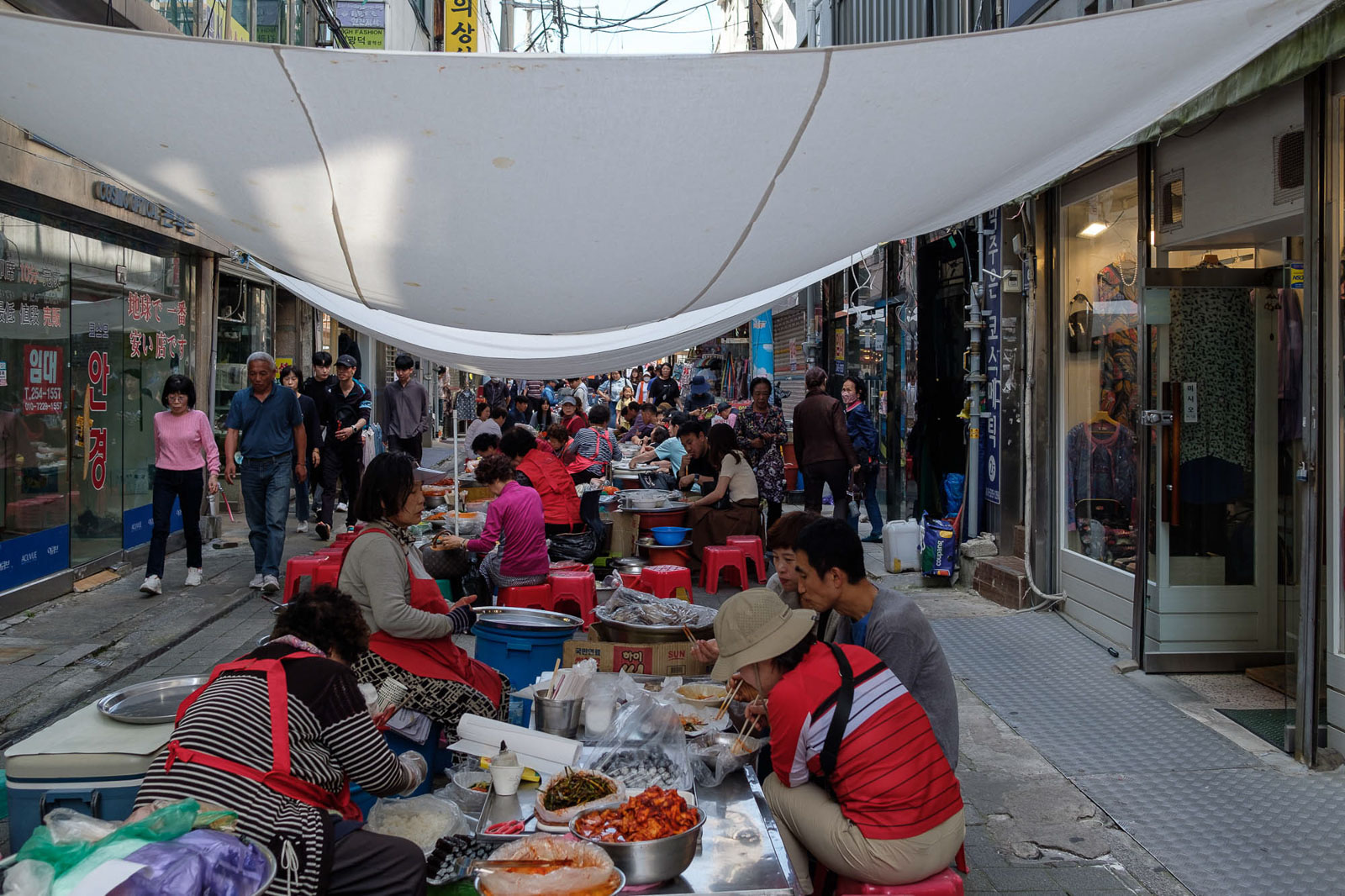
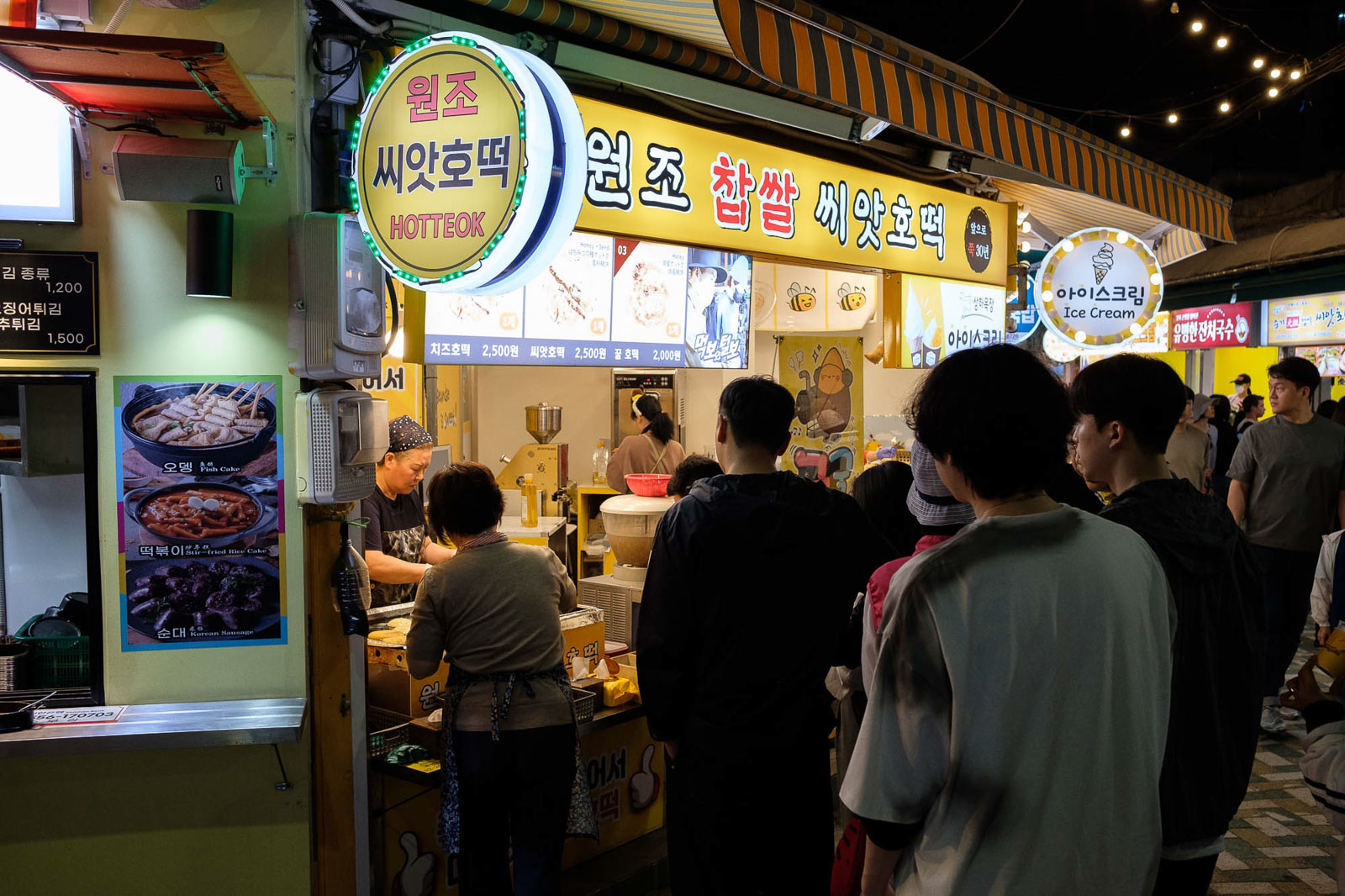
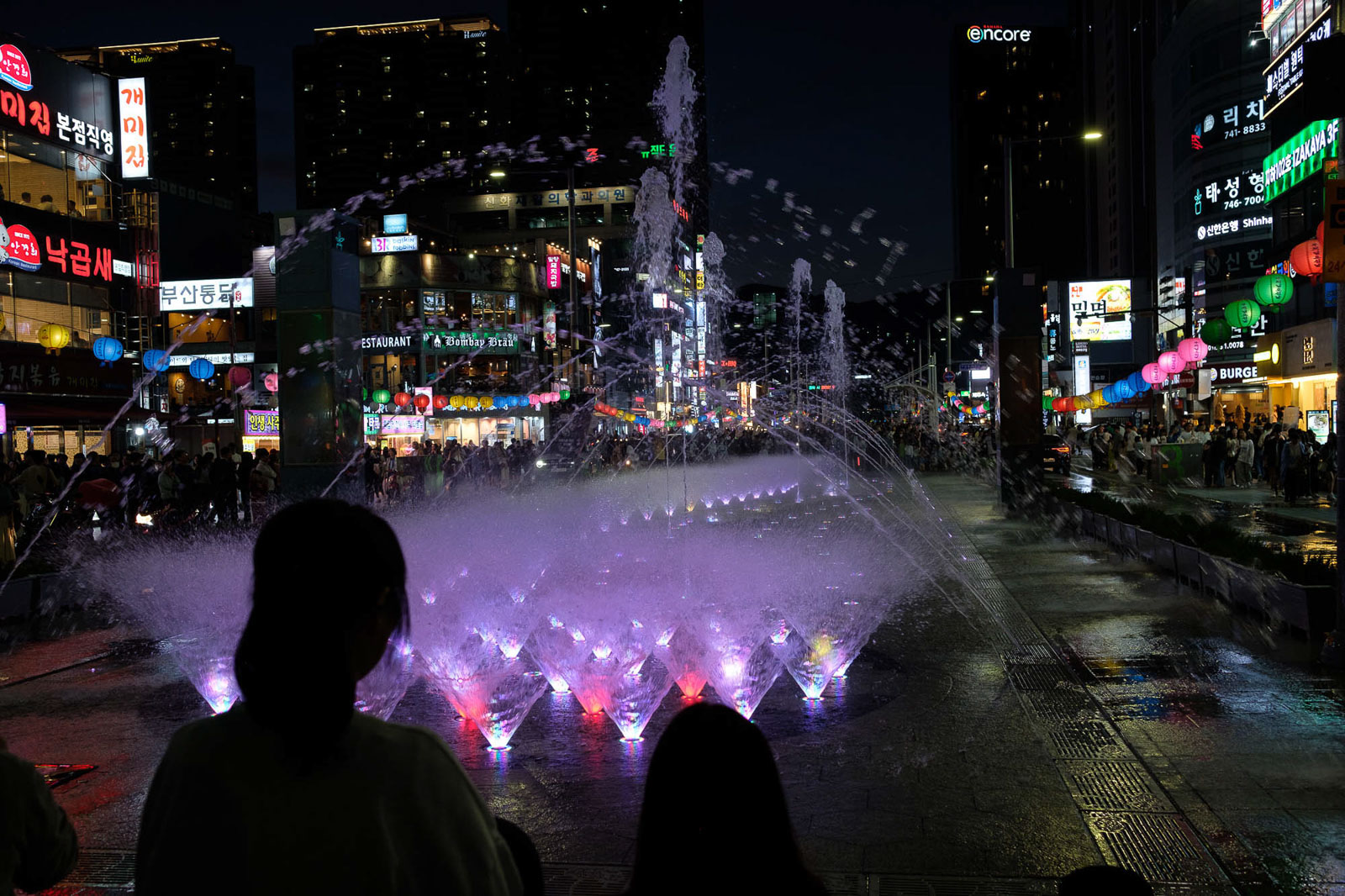
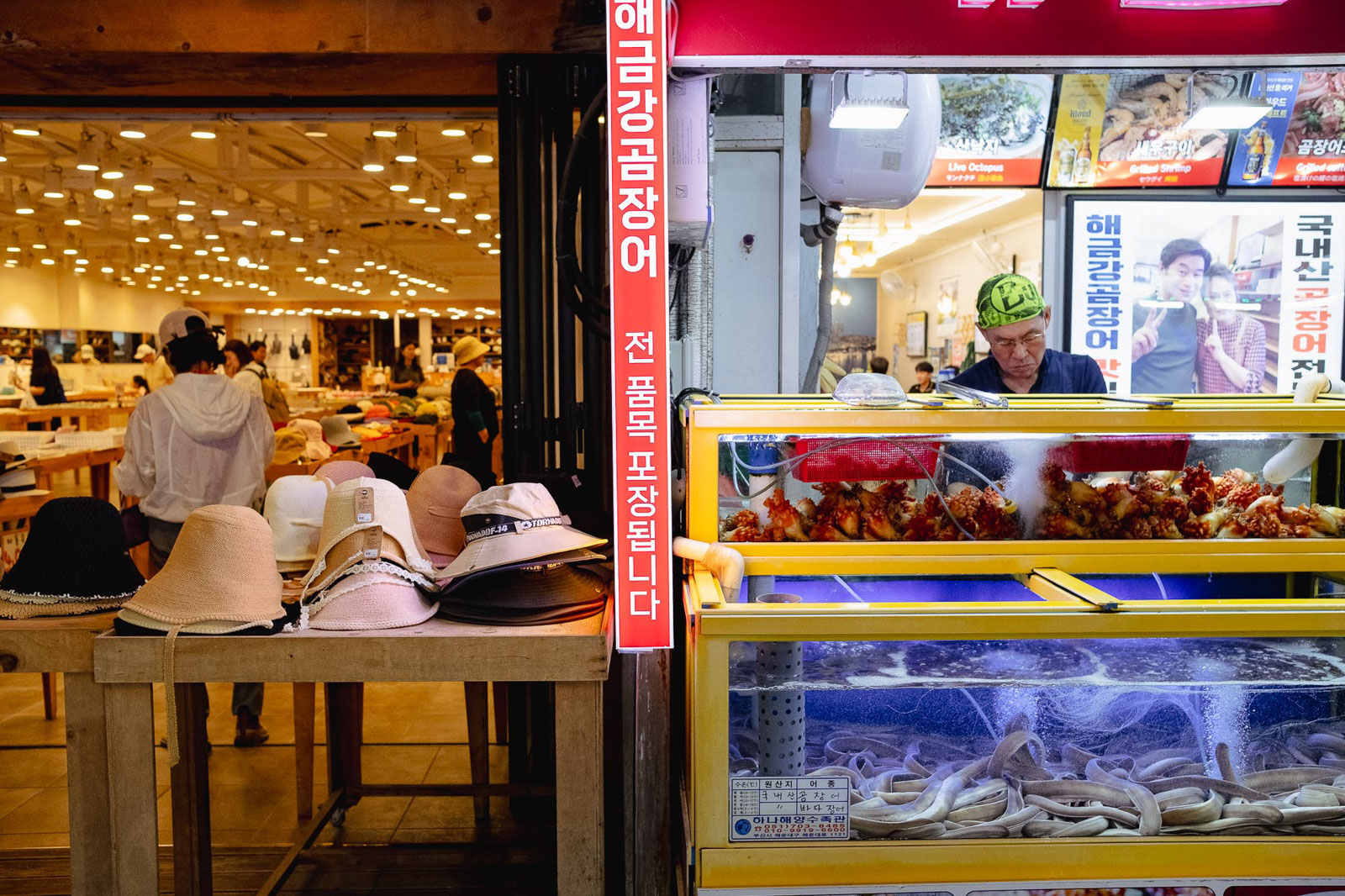
Nampo-dong represents the most popular dimension of Busan: covered markets, illuminated signs, street food and small shops open until late in the evening. Not far away, Haeundae Beach shows the contemporary face of the city, including urban beaches, skyscrapers and cafes overlooking the sea, where the sea itself becomes a social space and part of everyday life.
Busan
Busan è la seconda città della Corea del Sud e il principale porto del paese. Stretta tra montagne e mare, vive di contrasti: industriale e spirituale, frenetica e quotidiana allo stesso tempo. Per molti coreani rappresenta l’opposto di Seoul: meno formale, più diretta, più legata alla vita concreta e al mare.
Tra mare e architettura, la città sembra muoversi lentamente in uno spazio sospeso, dove la presenza umana resta discreta e silenziosa. Spiagge urbane, mercati, luci artificiali e geometrie costiere convivono in un equilibrio continuo tra densità e apertura.
Le persone attraversano gli spazi pubblici con naturalezza, trasformando il paesaggio urbano in un luogo condiviso più che spettacolare. Rimane una sensazione costante di calma e quotidianità, in cui il mare non è sfondo ma presenza concreta che accompagna ogni gesto.
Durante la Guerra di Corea, Busan fu l’unica grande città a non essere occupata dal Nord e diventò rifugio per migliaia di profughi. Questa memoria è ancora presente nei quartieri collinari colorati, nelle case addossate l’una all’altra e nell’identità orgogliosa dei suoi abitanti.
Il simbolo della città è Jagalchi Fish Market, il più grande mercato del pesce della Corea. Qui il pesce non è soltanto commercio, ma parte della cultura quotidiana: aste all’alba, vasche vive, odore di sale e venditrici storiche che incarnano il carattere forte e pragmatico della città.
Nampo-dong rappresenta la dimensione più popolare di Busan: mercati coperti, insegne luminose, street food e piccoli negozi aperti fino a tarda sera. Poco distante, Haeundae Beach mostra il volto contemporaneo della città, tra spiagge urbane, grattacieli e caffè affacciati sul mare, dove il mare stesso diventa spazio sociale e parte della vita quotidiana.