Andrea Riberti-Ivanka’s house
Ivanka’s house
(delicate story with the scent of chamomile)
I descend quickly through the valleys of the Selim pass, after leaving behind me its famous caravanserai.
In front of me stretches Lake Sevan. The atmospheres are halfway between a Dolomite pasture and the gloomy and powerful views of the Cornish countryside.
A row of crosses on a low hill, on the edge of the lake, are the only traces of the passage of man.
A few more kilometers and I reach a small village. A short straight street, lined with low, colorful houses. The blue recalls the lively atmospheres of Cuba or those of the famous houses of Sidi Bou Said in northern Tunisia. But we are right in the center of Armenia, almost halfway between the border of Azerbaijan and Turkey.
In this territory, sculpted by history and the movement of peoples and cultures, enclaves are not rare. Some feel they belong to other homelands, others to different ideologies and religions.
I cautiously approach the first houses: I am entering the village of the Molokani, the so-called “milk drinkers”. This small community is just one of the many groups present in Armenia and who came here following the persecutions of Ivan the Terrible, in the seventeenth century, and then deported to the Caucasus in 1833.
The Molokans are a particular religious group, distinct from the Russian Eastern Christian group. They do not follow the prescriptions of the Orthodox Church and consume milk and cheese even during the Lenten period. A practice that dates back to the Nestorian church of the eleventh century.
In Armenia there are about 450 individuals divided into two communities: extremely shy, very hardworking and peaceful people. Men have long white beards and women always wear a colored handkerchief on their heads. All reject institutional formalisms and practice an ancient Christianity. They often get married within the same community, although now the girls work in nearby cities and it is likely that their lives will also open up to other encounters.
The small town is an orderly and symmetrical row of wooden houses. The only visible inhabitants are a group of children. Very blond, his eyes the tint of Arctic ice.
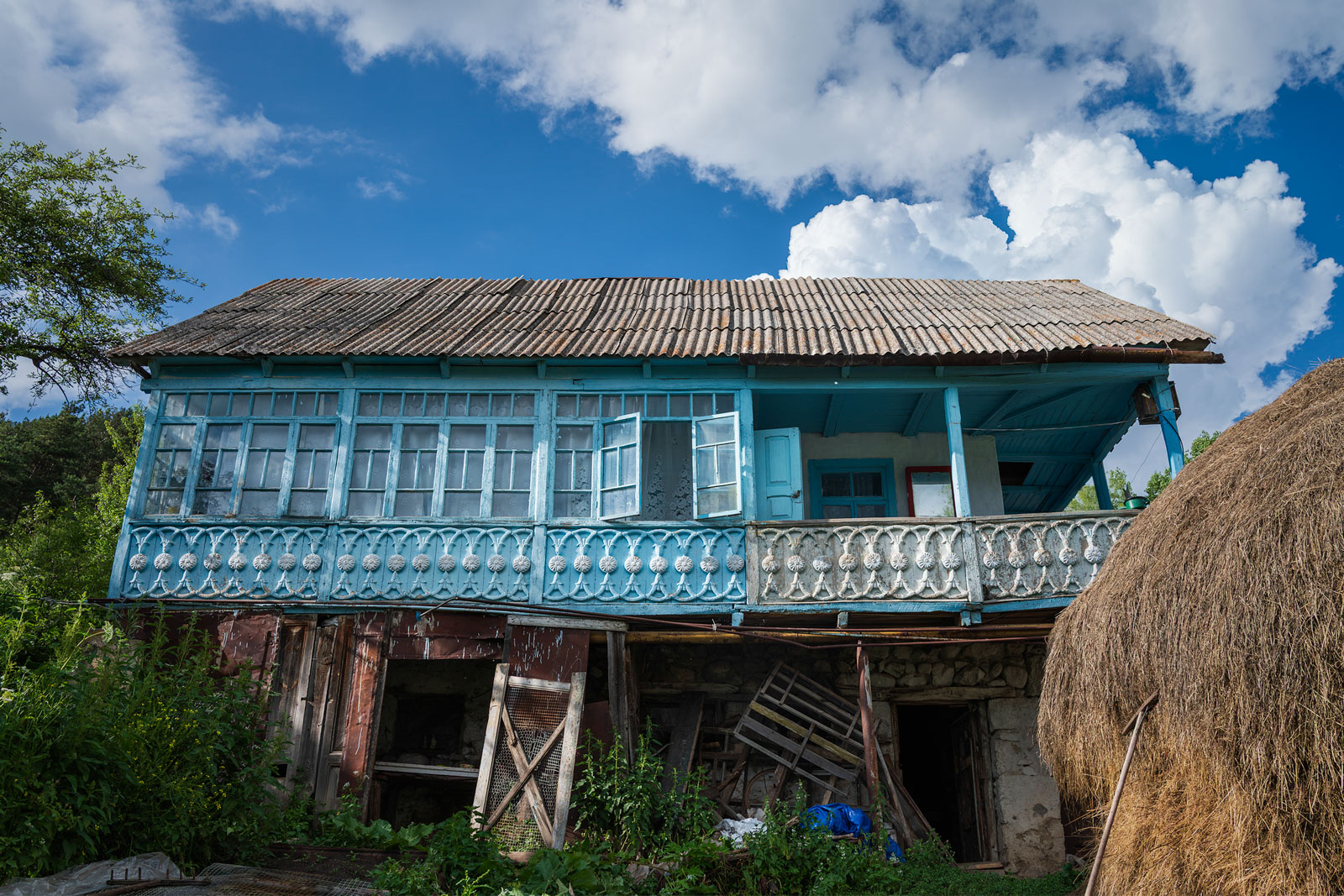
At the beginning of the village, on the right, lives Ivanka, a lonely woman. Recently arrived, who knows where and with what story behind it. The house is blue, made of carved wood. Upstairs a long row of tall windows of extraordinary elegance worn out by time. Ivanka is cheerful, proud, full of energy. Colorful.
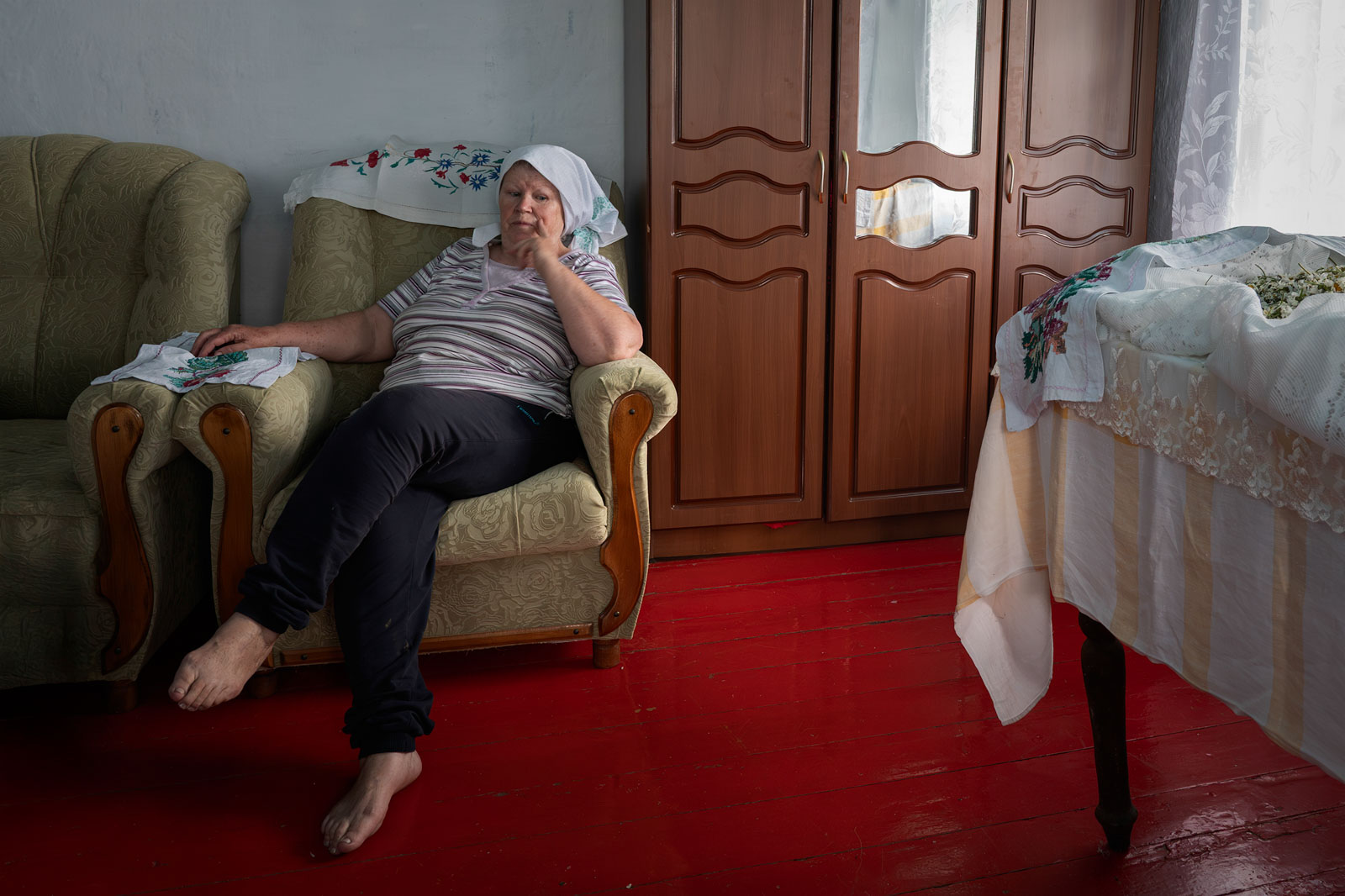
He welcomes us at the end of the porch. The house is like her: extraordinary. Walls the color of the sky, red lacquered floor. Three small rooms in which his life now takes place. Perfect.
Long curtains of white lace separate the long vestibule from prying eyes. Lace and lace on the furniture. Tiny lilac flowers in enameled jugs. The kitchen, very tidy, borders the bathroom, in a millimetric composition, in which every element seems to have been designed by a famous architect.
A small stove, next to the bed, for colder evenings. The suitcase on the bedside table.
Ivanka speaks fast, in a language unknown to me. He tells his story that will remain a mystery. Her movements are cheerful: now she dances, after putting on her “party” dress, widening her skirt with large red flowers. However, the gaze is always severe and attentive.
In the center of the living room, a large plate, lying on a finely embroidered sheet. Tiny chamomile flowers are drying in the air.
The spotted bedspread reminds me of Russian descent, from tsarina.
Now she looks outside, Ivanka, greets us, beyond the curtains of the portico: her gaze very clear, lost and vaguely satisfied. In a refined dignity that I have rarely met.
ITALIANO
A casa di Ivanka
(storia delicata al profumo di camomilla)
Scendo veloce attraverso le vallate del passo Selim, dopo aver lasciato alle mie spalle il suo famoso caravanserraglio.
Davanti a me si estende il Lago Sevan. Le atmosfere sono a metà strada tra un pascolo dolomitico e le vedute fosche e potenti delle campagne della Cornovaglia.
Una fila di croci su una bassa collina, ai margini del lago, sono le uniche tracce del passaggio dell’uomo.
Ancora qualche chilometro e raggiungo un piccolo villaggio. Una breve strada rettilinea, costeggiata da case basse, coloratissime. Il blu richiama le vivaci atmosfere di Cuba o quelle delle famose abitazioni di Sidi Bou Said nel nord della Tunisia. Ma siamo proprio nel centro dell’Armenia, quasi a metà strada tra il confine dell’Azerbaigian e la Turchia.
In questo territorio, scolpito dalla storia e dal movimento di popoli e culture, le enclavi non sono rare. Alcune si sentono appartenenti ad altre patrie, altre ancora a differenti ideologie e religioni.
Mi avvicino prudente alle prime case: sto entrando nel villaggio dei Molokani, i cosiddetti “bevitori di latte”. Questa piccola comunità rappresenta soltanto uno dei tanti gruppi presenti in Armenia e capitati qui a seguito delle persecuzioni di Ivan il Terribile, nel XVII secolo, e deportati poi nel Caucaso nel 1833.
I Molokani sono un particolare gruppo religioso, distinto da quello cristiano orientale russo. Non seguono le prescrizioni della Chiesa Ortodossa e consumano latte e formaggi anche durante il periodo quaresimale. Pratica che risale addirittura alla chiesa nestoriana del XI secolo.
In Armenia sono circa 450 individui suddivisi in due comunità: persone estremamente timide, molto laboriose e pacifiche. Gli uomini hanno lunghe barbe bianche e le donne indossano sempre un fazzoletto colorato in capo. Tutti rifiutano i formalismi istituzionali e praticano un cristianesimo antico. Spesso si sposano all’interno della stessa comunità, anche se ora le ragazze lavorano nelle città vicine ed è probabile che la loro vita si apra anche ad altri incontri.
Il piccolo paese è una fila ordinata e simmetrica di case in legno. Gli unici abitanti visibili sono un gruppo di bambini. Biondissimi, gli occhi della tinta del ghiaccio artico.
All’inizio del villaggio, sulla destra, abita Ivanka, una donna sola. Arrivata da poco, chissà da dove e con quale storia alle spalle. La casa è azzurra, di legno intagliato. Al piano superiore una lunga fila di alte finestre di straordinaria eleganza consunta dal tempo. Ivanka è allegra, fiera, piena di energia. Coloratissima.
Ci accoglie in fondo al porticato. La casa è come lei: straordinaria. Pareti del colore del cielo, pavimento laccato di rosso. Tre piccoli ambienti in cui si svolge, ora, la sua vita. Perfetta.
Lunghe tende di pizzo candido separano il lungo vestibolo da sguardi indiscreti. Merletti e trine sui mobili. Minuscoli fiori lilla in brocche smaltate. La cucina, ordinatissima, confina con il bagno, in una composizione millimetrica, in cui ogni elemento pare disegnato da un architetto di fama.
Una piccola stufa, accanto al letto, per le serate più fredde. La valigia sopra il comodino.
Parla veloce, Ivanka, in un linguaggio a me sconosciuto. Racconta la sua storia che rimarrà un mistero. I suoi movimenti sono allegri: ora balla, dopo aver indossato l’abito “da festa”, allargando la sua gonna dai grandi fiori rossi. Lo sguardo però sempre severo e attento.
Al centro del soggiorno, un grande piatto, adagiato su un lenzuolo finemente ricamato. Minuscoli fiori di camomilla, stanno essiccando all’aria.
Il copriletto maculato mi ricorda discendenze russe, da zarina.
Ora guarda fuori, Ivanka, ci saluta, oltre le tende del porticato: lo sguardo chiarissimo, perduto e vagamente soddisfatto. In una dignità raffinata che raramente mi è capitato di incontrare.